Change is coming to roofing.
Menu

Scene unavailable. The poster frame and the words in HTML

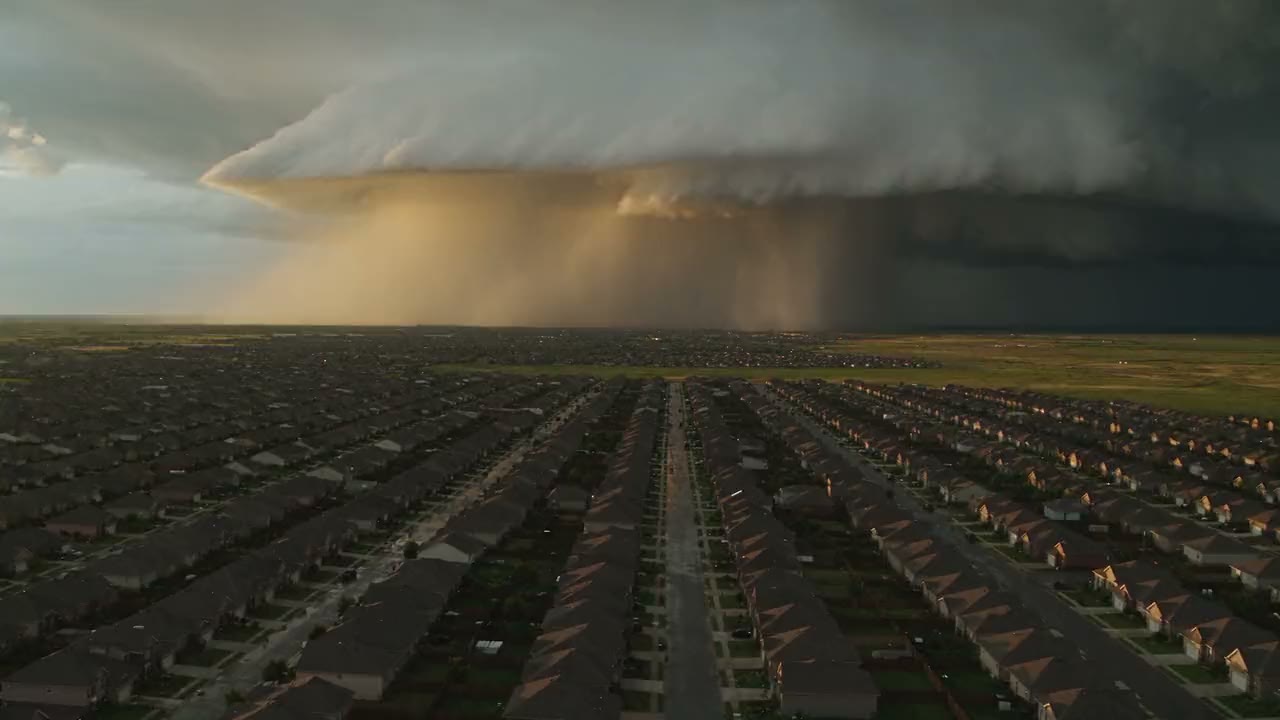
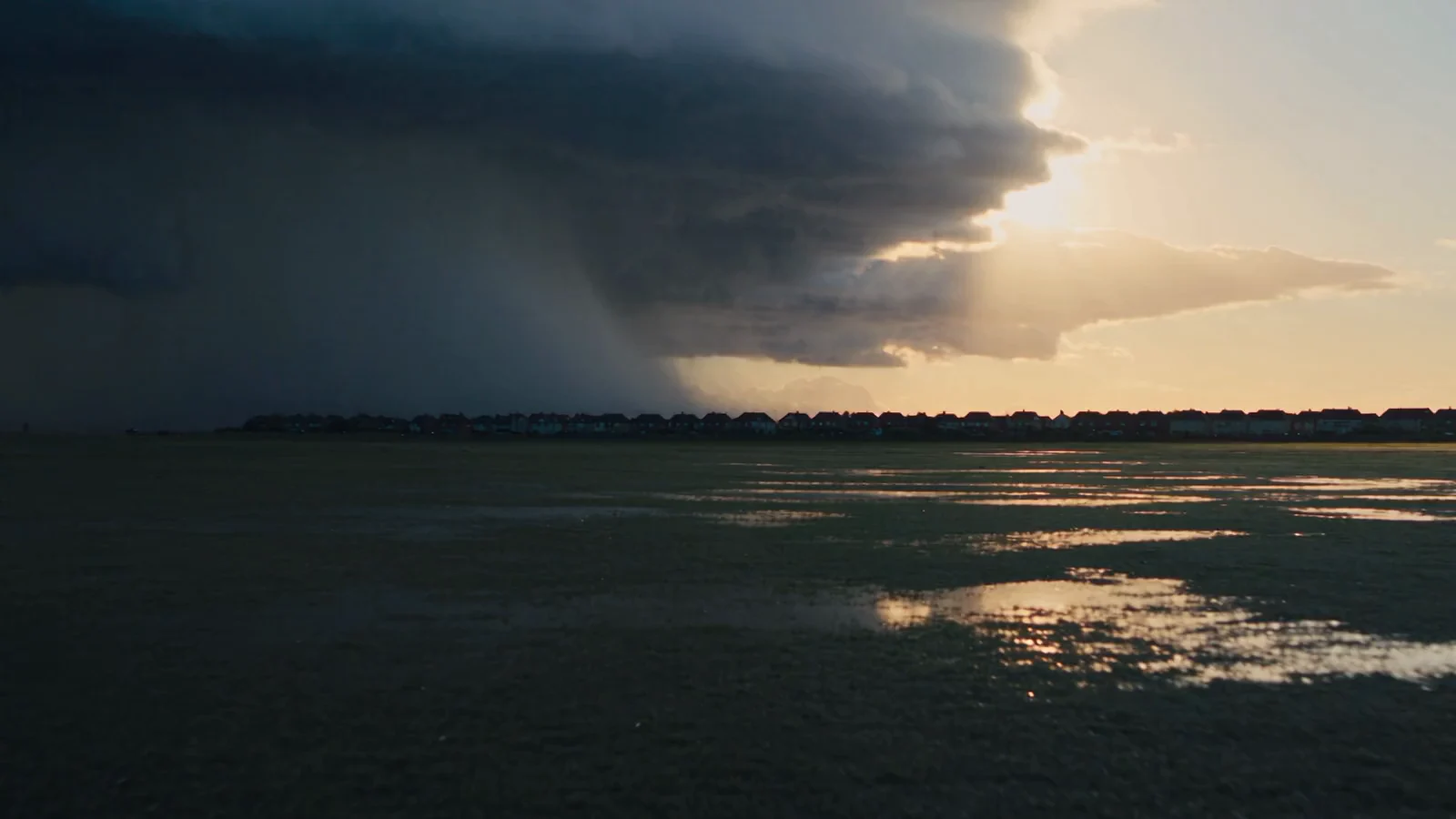
A supercell rolls over a suburb

The storm

Change is coming to roofing.

You can't stop it.

One clear next step for your role

Here's what it means for you.

In our view, yes. Nobody can stop it. What matters is what you do next.

What this shows

Labels on this scene

  • Picture Storm film: generated illustration · mood only.
  • Our view Change is coming to roofing. You can't stop it.

Is change coming to roofing, whether we like it or not?

In our view, yes. Nobody can stop it. What matters is what you do next.

You start with our view stated plainly, labelled as a view and not a forecast.

The research paper says AI and robots reaching roofing at the same time is possible, not certain. "You can't stop it" is our view.

  • Editorial Change is coming to roofing. You can't stop it. Source: Foundation Projects - The work above us (article text, 2026-10-03).
  • Editorial AI and robots could reach roofing at the same time, but that is not certain. The question is whether roof work stays the same long enough for people to learn the trade. Source: Foundation Projects - The work above us (article text, 2026-10-03).
What the storm is made of.Follow the next part ↓

AI is changing office work.

Robots may change roof work too.

Two things: AI in the office now, and robots that may come to roof work later.

What this shows

Labels on this scene

  • Picture Storm film: generated illustration · mood only.
  • Our view AI is changing office work. Robots may change roof work too.

What is the storm made of?

Two things: AI in the office now, and robots that may come to roof work later.

You know which two changes the rest of the page follows.

  • Editorial framing AI is changing office work. Robots may change roof work. That is the paper's framing. Source: Foundation Projects - The work above us (article text, 2026-10-03).
Which one is you?Follow the next part ↓

You can take part in this. Or you can let it happen to you.

Which one is you?

What this shows

Labels on this scene

  • Picture Films: generated illustration · mood only.
  • Our view You can take part in this. Or you can let it happen to you.
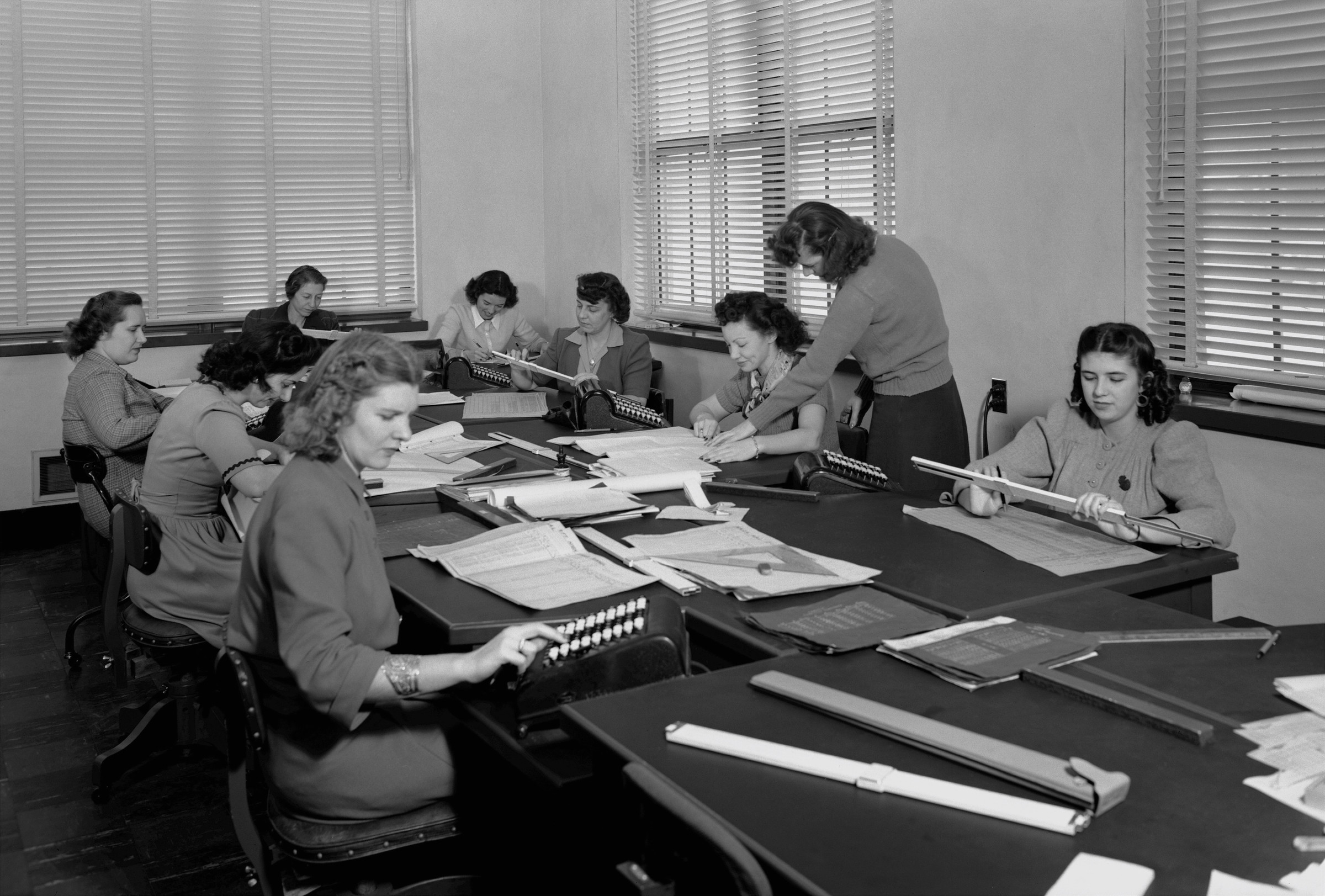
Human computers processing wind tunnel data, NACA Ames, 1943
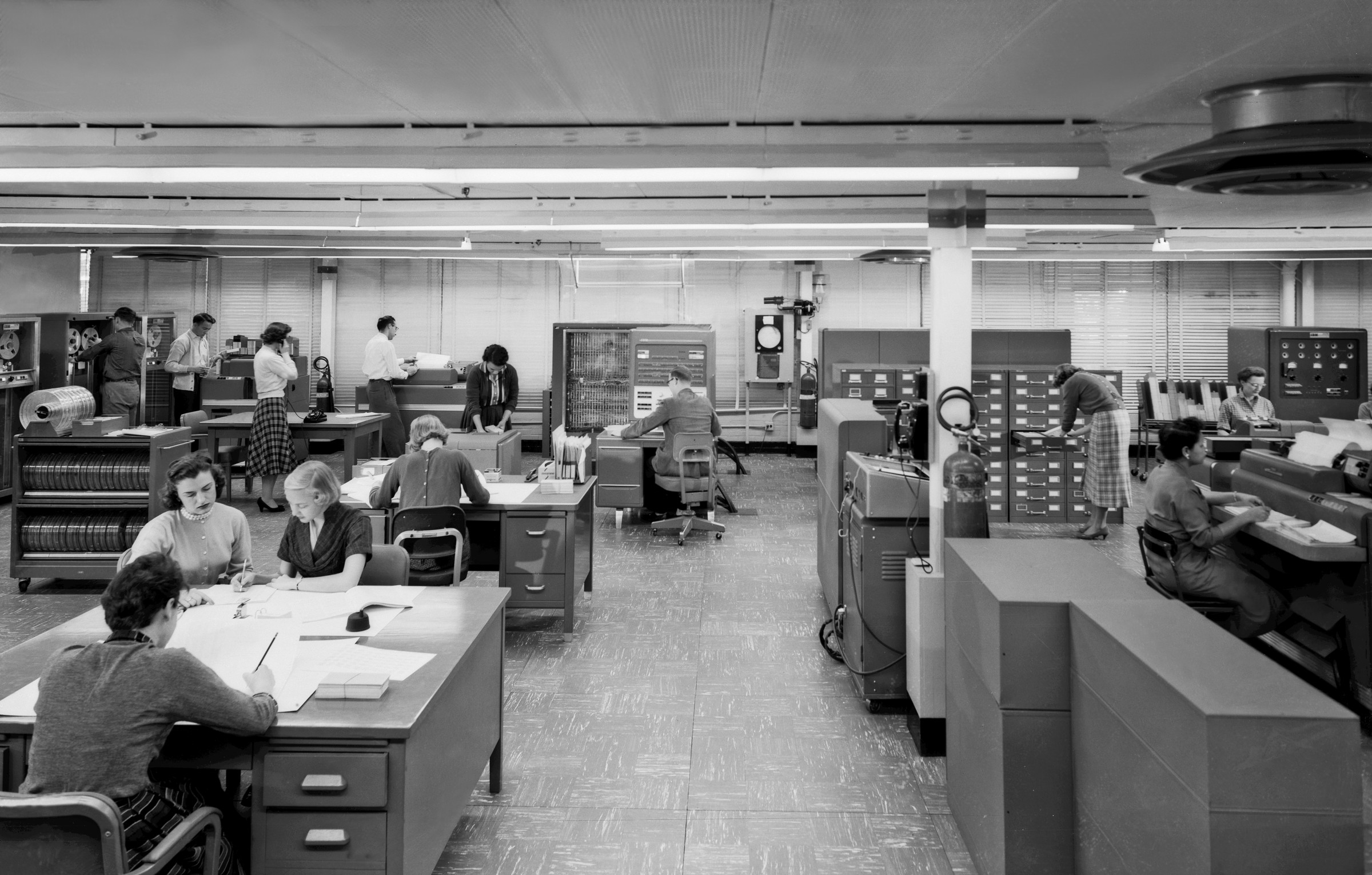
An IBM 704 computer room at NACA Langley, 1957

It has happened before, and what the model says

This isn't the first time.

  1. This isn't the first time. 'Computer' used to be a job title: a person who did math by hand.

  2. When electronic computers came, many learned to program them. Today there are about 5.3 million computer and math jobs.

Yes. 'Computer' was once a person's job. Many of those people learned to program the machines.

What this shows

Labels on this scene

  • Archival photo NACA / NASA Ames Research Center, ARC-1943-AAL-4961 (1943). NASA media: generally not subject to copyright in the United States. No NASA endorsement implied. NACA Langley / NASA, photo by Taub, LRC-1957-B701_P-05391 (1957). NASA media: generally not subject to copyright in the United States. No NASA endorsement implied.
  • Official description · NASA History Office This isn't the first time. When electronic computers came, many learned to program them.
  • Measured · BLS OEWS May 2025 When electronic computers came, many learned to program them.

Has a new tool taken over a whole kind of work before?

Yes. 'Computer' was once a person's job. Many of those people learned to program the machines.

You see that a job can change completely and still lead to more work.

By 1946, one lab alone had trained about 400 human computers.

One real story: Dorothy Vaughan and many former human computers joined NASA's new computing division. She became an expert FORTRAN programmer.

The 5.3 million is a wider group than the 1960 count, and it leaves out the self-employed.

  • Official description 'Computer' used to be a job title. It meant a person who did math by hand. Source: NASA History - When the Computer Wore a Skirt.
  • Official description By 1946, one lab alone had trained about 400 of them. Source: NASA History - When the Computer Wore a Skirt.
  • Official description When electronic computers came, many learned to program them. Source: NASA History - When the Computer Wore a Skirt; NASA - Dorothy Vaughan (people page).
  • Official estimate Today there are about 5.3 million computer and math jobs in the U.S. In 1960 there were about 12,000 computer specialists, and about 2.5 million by 2000. Source: BLS Monthly Labor Review 2006 - Wyatt and Hecker, Occupational changes during the 20th century (Wayback); BLS OEWS May 2025 - Computer and mathematical occupations (API).
  • Official description Dorothy Vaughan and many former human computers joined NASA's new computing division. She became an expert FORTRAN programmer. Source: NASA - Dorothy Vaughan (people page).
  • Official description Archival photo · NACA / NASA Ames Research Center, ARC-1943-AAL-4961 (1943): human computers processing wind tunnel data. Source: NASA Image Library - ARC-1943-AAL-4961 record (API); NASA - Images and media usage guidelines (Brand Center).
  • Official description Archival photo · NACA Langley / NASA, photo by Taub, LRC-1957-B701_P-05391 (1957): IBM 704 computer operations. Source: NASA Image Library - LRC-1957-B701_P-05391 record (API); NASA - Images and media usage guidelines (Brand Center).
Telephone operators.Follow the next part ↓

Under 40,000

telephone and switchboard operators today

What this shows

telephone and switchboard operators today: about 37,710 telephone and switchboard operators. 2 figures at 20,000 each.

1 figure = 20,000 operators

Measured · Census 1970 (Series D351); BLS OEWS May 2025

Not the same people, and not a one-for-one swap.

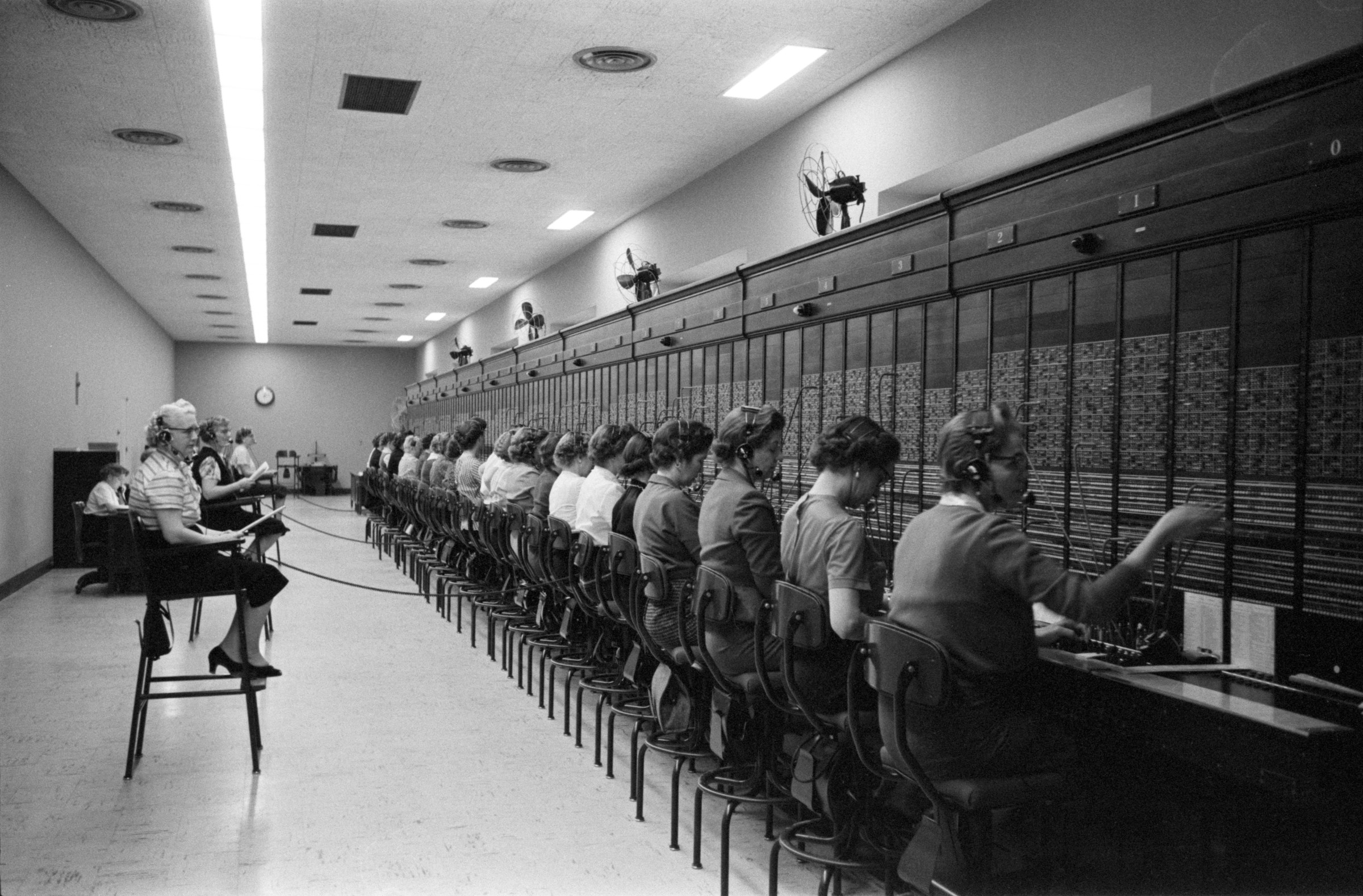
Archival photo · Library of Congress, Prints & Photographs Division, U.S. News & World Report Collection, LC-DIG-ds-04925 (Marion S. Trikosko, 1959)

Labels on this scene

  • Measured · Census 1970 (Series D351); BLS OEWS May 2025 The number on screen.
  • Archival photo Library of Congress, Prints & Photographs Division, U.S. News & World Report Collection, LC-DIG-ds-04925 (Marion S. Trikosko, 1959). No known restrictions on publication.
  • Measured · Census 1970 In 1970, about 420,000 Americans worked as telephone operators.
  • Measured · BLS OEWS May 2025 Today, fewer than 40,000 do.
  • Economist's summary · Bessen Today, fewer than 40,000 do.

What happened to telephone operators when machines connected the calls?

You see the task move to machines and the people move to the conversation.

Not the same people, and not a one-for-one swap.

1 figure stands for 20,000 operators. Today: 3,430 telephone operators plus 34,280 switchboard operators, about 37,710 telephone and switchboard operators in all.

About 910,000 receptionists and 2.6 million customer service reps work today.

See the exact numbers
Telephone operators: 1 figure = 20,000 operators
ShotFiguresStands for
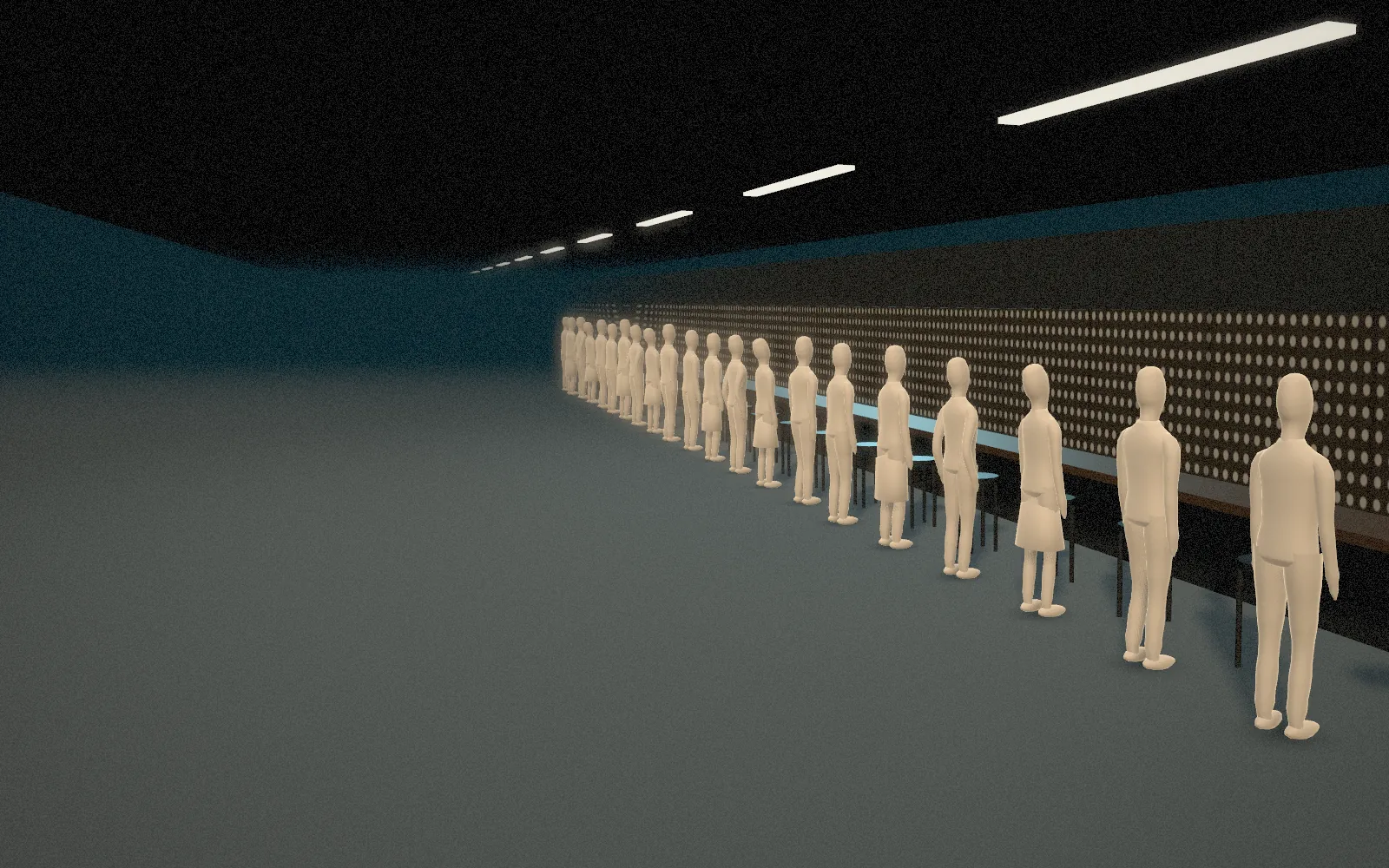
telephone operators in 197021about 420,000 telephone operators
telephone and switchboard operators today2about 37,710 telephone and switchboard operators

Measured · Census 1970 (Series D351); BLS OEWS May 2025

  • Official estimate In 1970, about 420,000 Americans worked as telephone operators. Today, fewer than 40,000 do. Source: Census - Historical Statistics of the US, Ch. D labor (OCR text); BLS OEWS May 2025 - Telephone operators (API); BLS OEWS May 2025 - Switchboard operators (API).
  • Derived arithmetic On the dark stage, 1 figure stands for 20,000 operators: 21 figures for 1970 and 2 for today. Source: Census - Historical Statistics of the US, Ch. D labor (OCR text); BLS OEWS May 2025 - Telephone operators (API); BLS OEWS May 2025 - Switchboard operators (API).
  • Attribution Machines took over connecting calls. People took over the conversation. Source: IMF F&D 2015 - Bessen, Toil and Technology (Wayback); BLS Monthly Labor Review 2006 - Wyatt and Hecker, Occupational changes during the 20th century (Wayback).
  • Official estimate About 910,000 receptionists and 2.6 million customer service reps work today. Source: BLS OEWS May 2025 - Receptionists and information clerks (API); BLS OEWS May 2025 - Customer service representatives (API).
  • Official description Archival photo · Library of Congress, Prints & Photographs Division, U.S. News & World Report Collection, LC-DIG-ds-04925 (Marion S. Trikosko, 1959): women working at the U.S. Capitol switchboard. Source: Library of Congress - Item record, U.S. Capitol switchboard 1959, LC-DIG-ds-04925 (Wayback).

Telephone operators.

  1. This is the U.S. Capitol switchboard in 1959.

  2. In 1970, about 420,000 Americans worked as telephone operators.

    About 420,000 telephone operators in 1970

  3. Today, fewer than 40,000 do. Machines took over connecting calls; people took over the conversation.

    Under 40,000 telephone and switchboard operators today

Telephone operators at the U.S. Capitol switchboard, 1959
Bank tellers.Follow the next part ↓
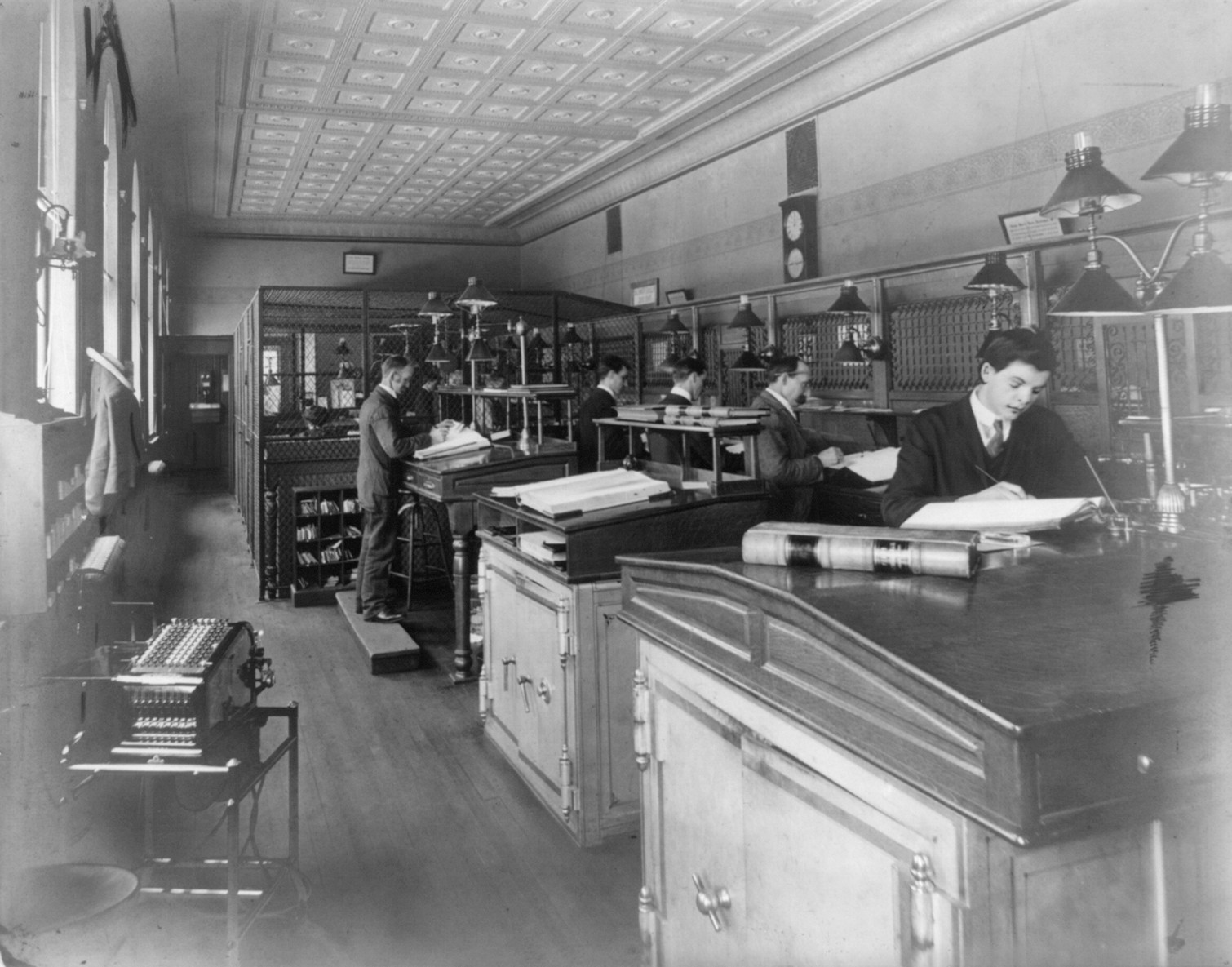
The bookkeeper's and teller's department of a New Jersey bank, 1908

Bank tellers.

  1. ATMs arrived in the 1970s. Bank teller jobs didn't disappear.

No. Teller jobs didn't disappear when ATMs arrived.

What this shows

Labels on this scene

  • Archival photo Library of Congress, LC-USZ62-23640 (1908). Library of Congress: no known restrictions on publication.
  • Economist's summary · Bessen ATMs arrived in the 1970s.

Did ATMs end bank teller jobs?

No. Teller jobs didn't disappear when ATMs arrived.

You hold the question: what happened to the tellers?

1970 counts people; 2010 and 2025 count jobs.

  • Official estimate + Attribution ATMs arrived in the 1970s. Bank teller jobs didn't disappear. They roughly doubled, to about 556,000 by 2010. Online banking has since cut them to about 330,000. Source: IMF F&D 2015 - Bessen, Toil and Technology (Wayback); Census - Historical Statistics of the US, Ch. D labor (OCR text); BLS OES May 2010 - Tellers (Wayback); BLS OEWS May 2025 - Tellers (API); BLS Occupational Outlook Handbook - Tellers (Wayback capture 2026-09-13); BLS Monthly Labor Review 2006 - Wyatt and Hecker, Occupational changes during the 20th century (Wayback).
  • Official description Archival photo · Library of Congress, LC-USZ62-23640 (1908): bookkeeper's and teller's department, First National Bank of Somerville, New Jersey. Source: Library of Congress - Item record, Somerville bank 1908, LC-USZ62-23640 (Wayback).
What the numbers did.Follow the next part ↓

Scene unavailable. The poster frame and the words in HTML

An ink drawing of a 1970s bank drive-up and cash machine; a second car rolls up behind the first

Teller jobs doubled.

  1. Teller jobs roughly doubled, to about 556,000 by 2010. Fewer branches and online banking have since cut them to about 330,000.

They roughly doubled by 2010. Fewer branches and online banking have cut them since.

What this shows

Labels on this scene

  • Picture Generated illustration · not a historical image.
  • Measured · Census 1970; BLS OES May 2010; BLS OEWS May 2025 Teller jobs roughly doubled, to about 556,000 by 2010.

What happened to teller jobs after ATMs?

They roughly doubled by 2010. Fewer branches and online banking have cut them since.

A new tool can grow a job before a later tool shrinks it.

1970: about 253,000 tellers (Census). 1970 counts people; 2010 and 2025 count jobs.

The drawing is a generated illustration, not a historical image.

  • Official estimate + Attribution ATMs arrived in the 1970s. Bank teller jobs didn't disappear. They roughly doubled, to about 556,000 by 2010. Online banking has since cut them to about 330,000. Source: IMF F&D 2015 - Bessen, Toil and Technology (Wayback); Census - Historical Statistics of the US, Ch. D labor (OCR text); BLS OES May 2010 - Tellers (Wayback); BLS OEWS May 2025 - Tellers (API); BLS Occupational Outlook Handbook - Tellers (Wayback capture 2026-09-13); BLS Monthly Labor Review 2006 - Wyatt and Hecker, Occupational changes during the 20th century (Wayback).
Farms.Follow the next part ↓

Scene unavailable. The poster frame and the words in HTML

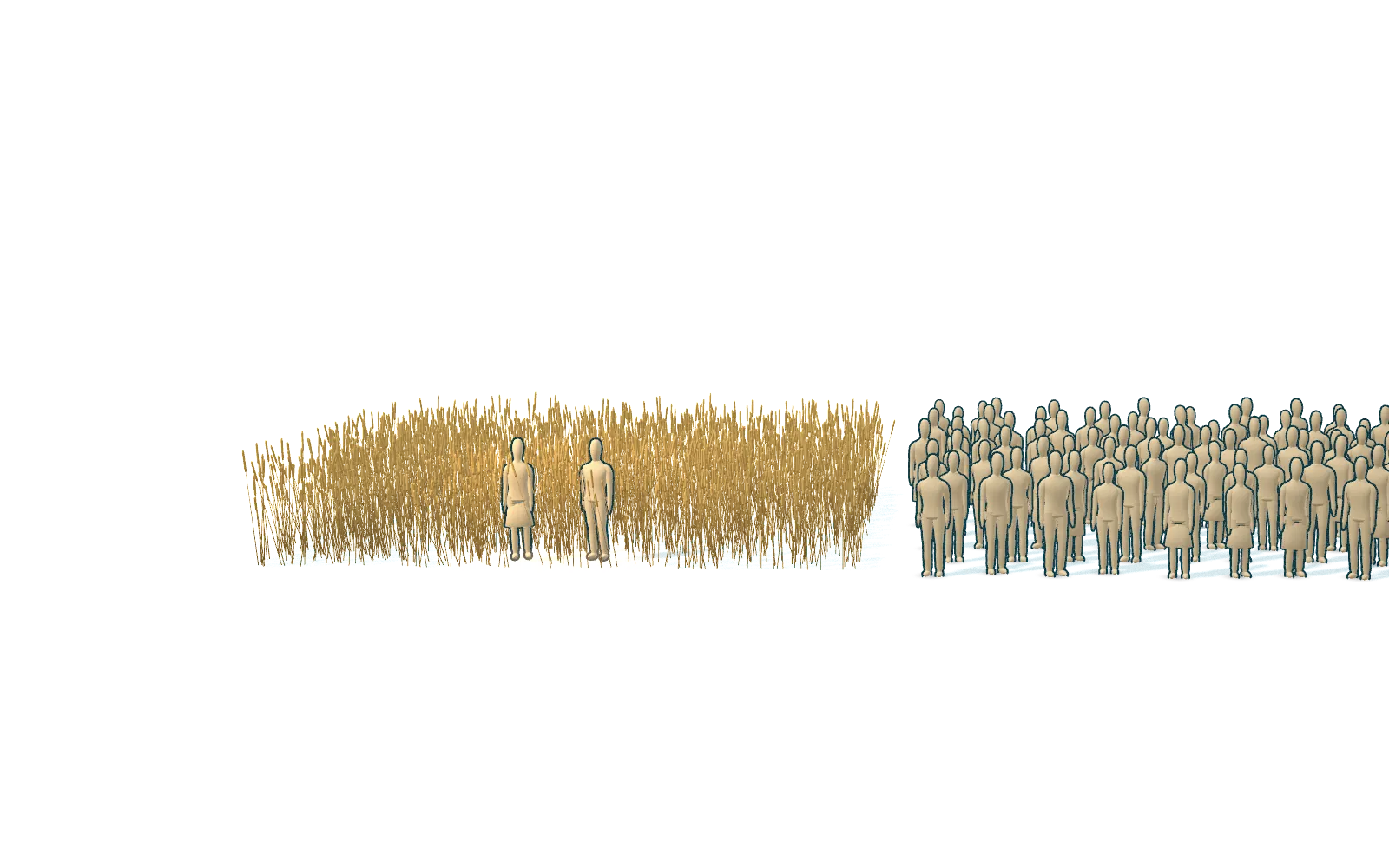
An ink drawing of a horse-drawn wheat harvest around 1900; the horses walk the binder through the wheat
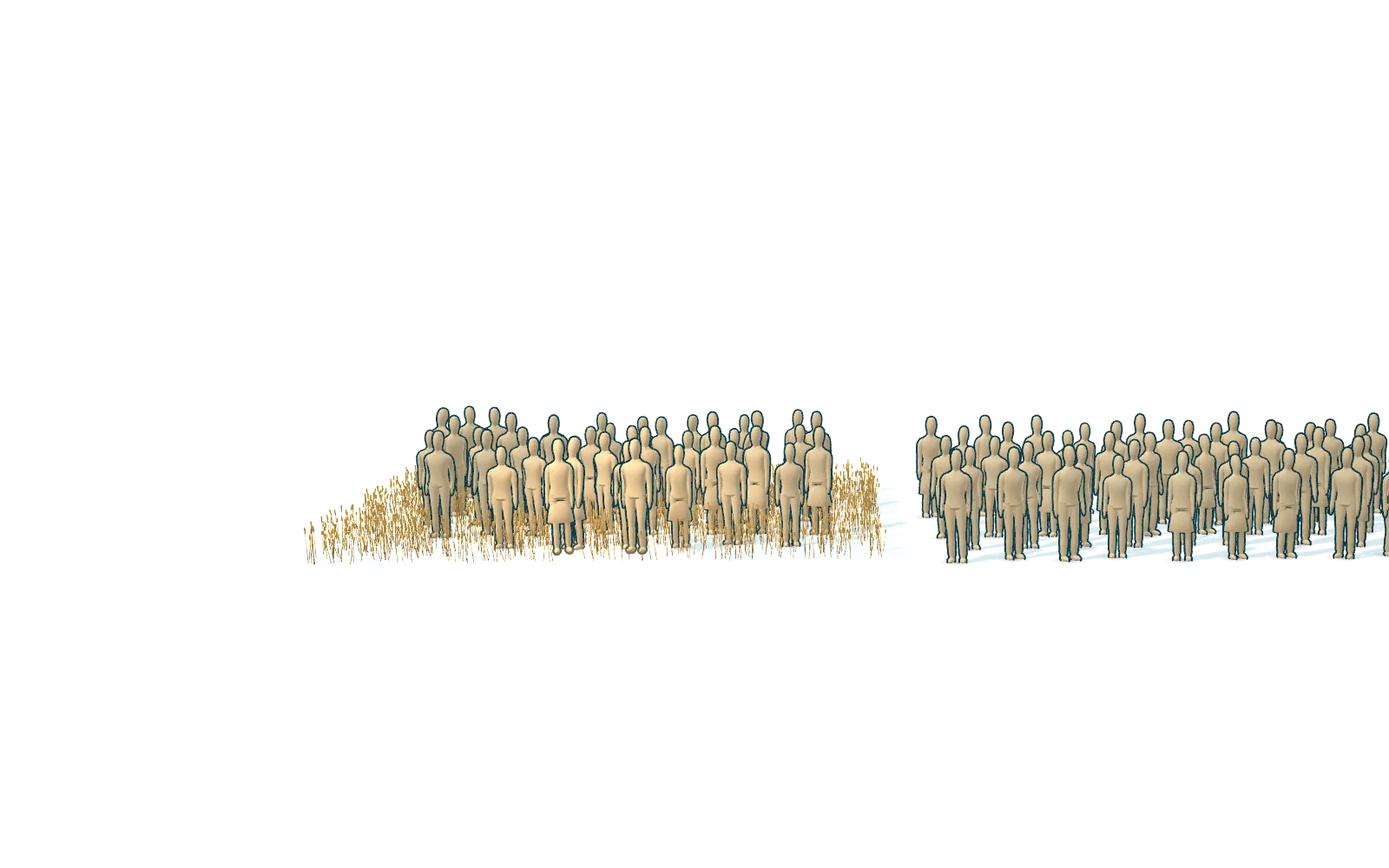
Farm work · 2Other work · 98

2of 100

American workers farmed in 2000

What this shows

American workers farmed in 2000: Farm work · 2, Other work · 98 (of 100).

American workers farmed in 2000: about 1.9 of every 100 American workers. 2 figures at 1 each.

1 figure = 1 in 100 workers

Measured · USDA Economic Research Service

1900 counts the whole workforce; 2000 counts employed workers.

Farm output is measured against 1948. The wheat height is a picture of that, not a measurement.

Labels on this scene

  • Picture Generated illustration · not a historical image.
  • Measured · USDA Economic Research Service The number on screen. In 1900, 41 of every 100 American workers farmed. By 2000, about 2 did.

How many American workers farmed in 1900, and how many by 2000?

You see a whole way of working shrink to a sliver.

The 1900 drawing and the 2000 drawing are generated illustrations, not historical images.

In every example here, the new tool stayed. What changed was the work. (Our view)

See the exact numbers
100 American workers: 1 figure = 1 in 100 workers
ShotFarm work (figures)Other work (figures)Stands for
American workers farmed in 190041 of 10059 of 100about 41 of every 100 American workers
American workers farmed in 20002 of 10098 of 100about 1.9 of every 100 American workers

Measured · USDA Economic Research Service

  • Official estimate In 1900, 41 of every 100 American workers farmed. By 2000, about 2 did. Source: USDA ERS - The 20th Century Transformation of U.S. Agriculture and Farm Policy (EIB-3, 2005).
  • Official estimate Farms now grow nearly three times what they did in 1948. Source: USDA ERS - Agricultural Productivity in the U.S., Summary of Recent Findings (updated 2026-08-25).
  • Editorial In every example here, the new tool stayed. What changed was the work. Source: IMF F&D 2015 - Bessen, Toil and Technology (Wayback).

Farms: 100 workers.

  1. In 1900, 41 of every 100 American workers farmed.

    41 of 100 American workers farmed in 1900

  2. By 2000, about 2 did. Yet farms now grow nearly three times what they did in 1948.

    2 of 100 American workers farmed in 2000

What the farms grow now.Follow the next part ↓

Scene unavailable. The poster frame and the words in HTML

A generated film: a person at a roofing office desk with a lamp and coffee, a roof drawing on the screen

Office work changes first.

  1. In our model, AI changes office work first. Records, estimates, orders and schedules move the most.

Office work. In our model, records, estimates, orders and schedules move the most.

What this shows

Labels on this scene

  • Picture Office film: generated illustration.
  • Foundation's model, not a forecast In our model, AI changes office work first.

Which work changes first?

Office work. In our model, records, estimates, orders and schedules move the most.

You know the office feels it first, and that switching jobs is hard.

In the model, AI changes office work from the start. Machines start on roof tasks only after model year 2.

  • Scenario assumption In the model, AI changes office work from the start. Machines start on roof tasks only after model year 2. Source: Foundation Projects - The work above us (article text, 2026-10-03).
  • Derived arithmetic In our model, records, estimates, orders and schedules move the most. Safety checks and surprises stay mostly with people. Source: Foundation Projects - The work above us - task bundles (task-bundles).
  • Scenario assumption The share of each task done by machines or AI agents at model year 6, in each scenario. The authors chose these shares. Source: Foundation Projects - The work above us - task bundles (task-bundles).
  • Editorial framing AI is changing office work. Robots may change roof work. That is the paper's framing. Source: Foundation Projects - The work above us (article text, 2026-10-03).
Switching jobs.Follow the next part ↓

Scene unavailable. The poster frame and the words in HTML

A generated film: a roofing office screen draws a roof outline

Switching jobs is hard.

  1. Some office workers may have to switch to jobs like electrician and nurse. That's in Anthropic's bigger-change scenarios, and Anthropic says switching is hard.

In Anthropic's bigger-change scenarios some office workers may have to switch to jobs like electrician and nurse, and Anthropic says switching is hard.

What this shows

Labels on this scene

  • Picture Office film: generated illustration.
  • Anthropic's working paper Some office workers may have to switch to jobs like electrician and nurse.

Can office workers just switch jobs?

In Anthropic's bigger-change scenarios some office workers may have to switch to jobs like electrician and nurse, and Anthropic says switching is hard.

You know switching jobs is not an easy answer.

Anthropic's model: Korinek, Jones, Sacher, Cotter and McCrory, Anthropic Institute Working Paper 2026-02.

Their scenarios leave fast progress in robots out on purpose. Foundation's model adds it.

  • Published model text Anthropic's Economics team built a model of how AI might affect jobs, growth and unemployment. In its bigger-change scenarios, coders and call-center agents may have to switch to jobs like electrician and nurse. Anthropic says switching jobs is difficult. Source: Anthropic Institute - Economic scenarios for transformative AI (web page, fetched 2026-10-03).
  • Attribution This work builds on Economic Scenarios for Transformative AI by Anton Korinek, Charles I. Jones, Szymon Sacher, Tess Cotter and Peter McCrory (The Anthropic Institute Working Paper No. 2026-02). Source: Korinek, Jones, Sacher, Cotter, McCrory (2026) - Economic Scenarios for Transformative AI, Anthropic Institute WP 2026-02 (text); Anthropic Institute - Economic scenarios for transformative AI (web page, fetched 2026-10-03).
  • Published model text Anthropic's scenarios and the Korinek et al. working paper leave fast progress in robots out on purpose. Source: Anthropic Institute - Economic scenarios for transformative AI (web page, fetched 2026-10-03); Korinek, Jones, Sacher, Cotter, McCrory (2026) - Economic Scenarios for Transformative AI, Anthropic Institute WP 2026-02 (text).
The trades.Follow the next part ↓

Scene unavailable. The poster frame and the words in HTML

A generated film: a humanoid robot works a practice roofing rig in a workshop

Some may move into the trades.

That takes time, and the work may change while they learn it.

The trades are changing too. A move into the trades takes time.

What this shows

Labels on this scene

  • Picture Rig film: generated illustration · practice rig.
  • The paper's view Some may move into the trades. That takes time, and the work may change while they learn it.

Are the trades a safe place to go?

The trades are changing too. A move into the trades takes time.

You see why "just learn a trade" is not the whole answer.

A move into the trades takes time. The work may change while a person is learning it. The paper's view.

  • Editorial A move into the trades takes time. The work may change while a person is learning it. Source: Foundation Projects - The work above us (article text, 2026-10-03).
What robot companies say.Follow the next part ↓

Scene unavailable. The poster frame and the words in HTML

An empty practice roofing rig in a workshop, a slow push-in; no robot in the picture

What companies say.

  1. Renovate Robotics says it built a robot that installs asphalt shingles on steep roofs. Pilots were planned with contractors.

A shingle-laying robot with planned pilots, and thousands of humanoid robots shipped. Neither shows a robot doing useful roof work on its own.

What this shows

Labels on this scene

  • Picture Rig film: generated illustration · no robot shown. The picture behind is a generated illustration, not Renovate's or Unitree's robot or rig.
  • Company's own report Renovate Robotics says it built a robot that installs asphalt shingles on steep roofs.

What have robot companies actually reported?

A shingle-laying robot with planned pilots, and thousands of humanoid robots shipped. Neither shows a robot doing useful roof work on its own.

You can tell a company's claim from a test of real work.

Three more company reports:

Unitree says it shipped more than 5,500 humanoid robots in 2025. That is the company's own report. Our view: shipping a robot is not the same as it doing useful work.

Boston Dynamics says its new Atlas robot hand can grip tools with triggers, such as nail guns.

Figure says its robot at a BMW plant ran 10-hour weekday shifts and loaded more than 90,000 parts.

What these reports do not show: a whole roof done on its own, reliability checked by others across many sites, or the full cost of an installed roof.

  • Partner announcement + Vendor-reported Saint-Gobain, the parent company of CertainTeed, announced a partnership with Renovate Robotics. Renovate's first robot installs asphalt shingles on steep roofs, and pilot projects were planned with contractors. Renovate calls its robot, Rufus, the world's first shingle installation robot. Source: Saint-Gobain North America - Partnership with Renovate Robotics (Wayback capture 2025-07-16); Renovate Robotics - Home page (Wayback capture 2026-09-18); Foundation Projects - The work above us (article text, 2026-10-03).
  • Vendor-reported Unitree says it shipped more than 5,500 human-shaped robots in 2025, sold and delivered. Shipping a robot is not the same as the robot doing useful work. Source: Unitree - Clarification regarding 2025 sales data (fetched 2026-10-03).
  • Vendor-reported Boston Dynamics says its new Atlas robot hand can grip tools with triggers, such as nail guns. Source: Boston Dynamics - Robot hands for modern AI and real work (2026-10-01, fetched 2026-10-03); Foundation Projects - The work above us (article text, 2026-10-03).
  • Vendor-reported Figure says its robot at a BMW plant ran a 10-hour shift, Monday to Friday, loaded more than 90,000 parts and ran for more than 1,250 hours. Source: Figure AI - Production at BMW (figure.ai, fetched 2026-10-03).
  • Editorial What the robot reports do not show: a whole roof done on its own, reliability checked by others across many sites, or the full cost of an installed roof. Source: Foundation Projects - The work above us (article text, 2026-10-03).
What no robot has done yet.Follow the next part ↓

Scene unavailable. The poster frame and the words in HTML

An empty practice roofing rig in a workshop, a slow push-in; no robot in the picture

No robot has been shown doing a whole roof on its own.

There is no set date for robots roofing on their own.

No. Shingle-only robots have been announced and demonstrated. There is no set date for robots roofing on their own.

What this shows

Labels on this scene

  • Picture Rig film: generated illustration · no robot shown.
  • The paper's reading No robot has been shown doing a whole roof on its own. There is no set date for robots roofing on their own.

Has any robot roofed a whole house on its own?

No. Shingle-only robots have been announced and demonstrated. There is no set date for robots roofing on their own.

You see the honest edge of the evidence before the model.

Robots built only to install shingles have been announced and demonstrated.

Any cost for a robot doing a roof task is a model, not a real-world measurement.

  • Editorial No robot has been shown doing a whole roof on its own. There is no set date for robots doing roof work on their own. Source: Foundation Projects - The work above us (article text, 2026-10-03).
  • Project decision Robots built only to install shingles have been announced and demonstrated. No robot has been shown doing a whole roof on its own. Any cost for a robot doing a roof task is a model, not a real-world measurement. Source: Qualified Remodeler - Renovate Robotics reveals roofing robot prototype (trade press, fetched 2026-10-04).
  • Editorial What the robot reports do not show: a whole roof done on its own, reliability checked by others across many sites, or the full cost of an installed roof. Source: Foundation Projects - The work above us (article text, 2026-10-03).
Foundation's model, as 100 people.Follow the next part ↓

Scene unavailable. The poster frame and the words in HTML

The storm, closer and darker

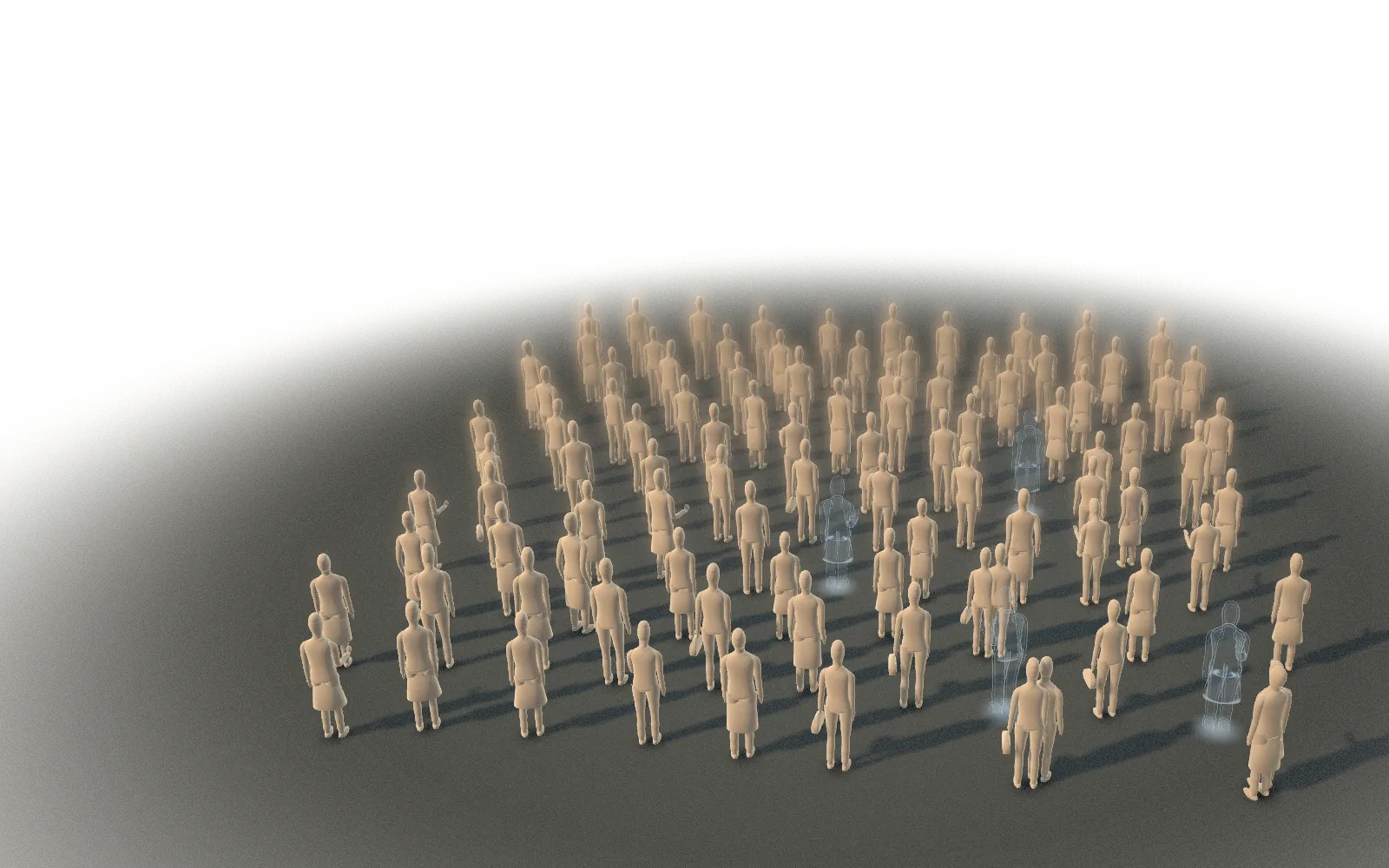
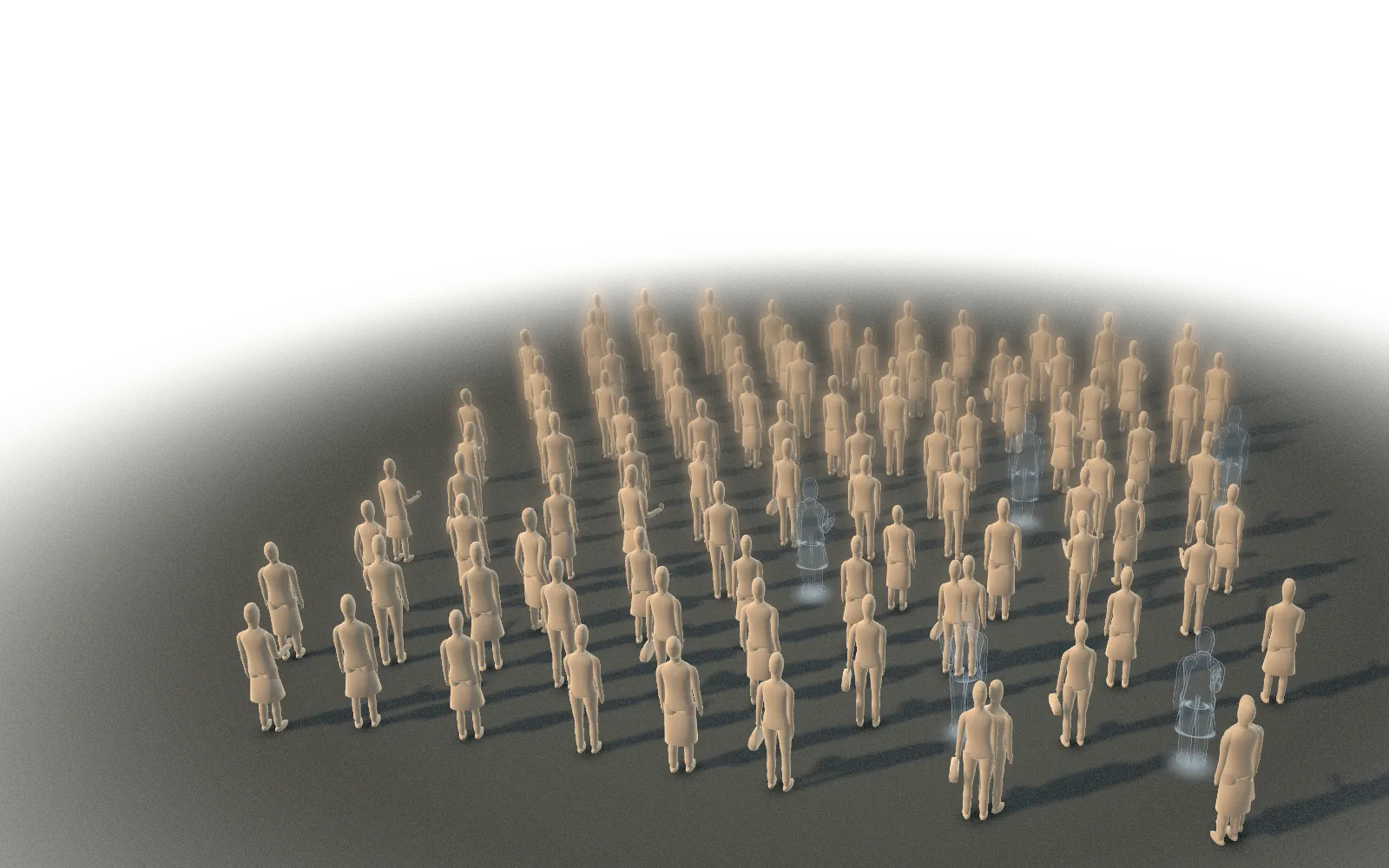
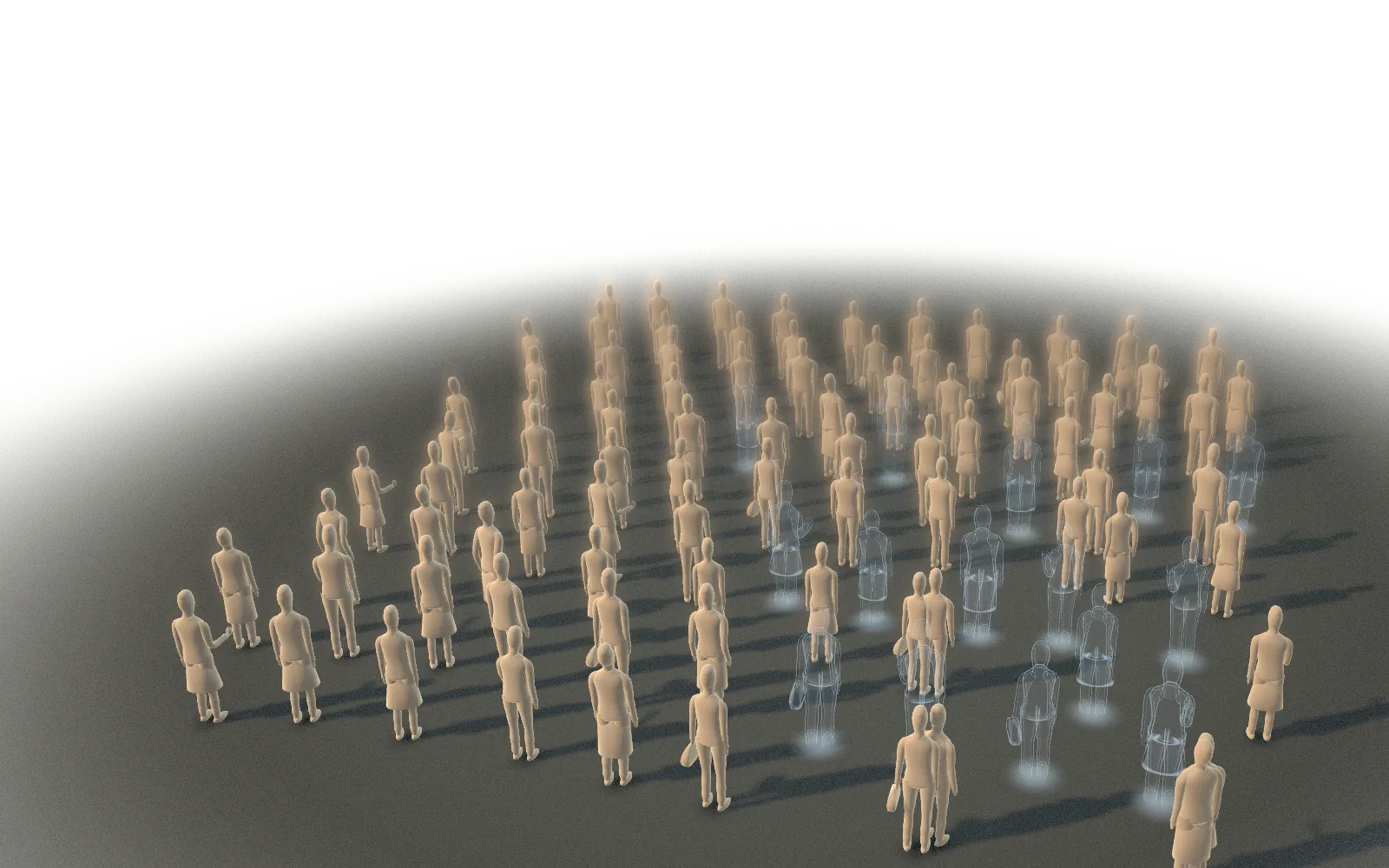
5of 100

out of work or retraining · Moderate

What this shows

Exact value: 4.6 per 100 (office workers out of work or retraining, Moderate scenario, model year 6).

Each figure stands for 1 in 100 office workers in the model. Not a real person.

Model year 6. Builds on Korinek et al. (2026). Out of work includes people retraining.

  • Working
  • Out of work or retraining (ghost)

Labels on this scene

  • Picture Storm film: generated illustration · mood only.
  • Foundation's model, not a forecast The number on screen. Here are 100 office workers. Mild case: still about 4. In Aggressive, the hardest case in the model, 15 of 100 office workers are out of work or retraining. Each ghost is 1 in 100 office workers.

In Foundation's model, how many of 100 office workers end up out of work or retraining?

You see the model as people, not a line on a chart.

This is Foundation's model, not Anthropic's: it adds the robots theirs leaves out. It builds on Korinek et al. (2026).

Exact values: 3.8 per 100 at the start; at model year 6, 3.89 (Mild), 4.59 (Moderate) and 15.10 (Aggressive).

The count ticks one figure at a time as you scroll. Only the start and the three scenarios are stops in the model.

Across all workers in the model: about 4 of 100 in Mild and Moderate, 12 of 100 in Aggressive.

100 office workers: each figure is 1 of 100 office workers
ShotWorkingOut of work or retraining (ghost)Working with machinesIn a new roleExact value
office workers out of work or retraining at the start of the model96 of 1004 of 1000 of 1000 of 1003.8 per 100
office workers out of work or retraining, Mild scenario, model year 696 of 1004 of 1000 of 1000 of 1003.9 per 100
office workers out of work or retraining, Moderate scenario, model year 695 of 1005 of 1000 of 1000 of 1004.6 per 100
office workers out of work or retraining, Aggressive scenario (the hardest), model year 685 of 10015 of 1000 of 1000 of 10015.1 per 100

Foundation's model, not a forecast

  • Model output In Foundation's model, about 4 of every 100 office workers are out of work or retraining at the start. By model year 6 it is about 4 in the Mild scenario, 5 in Moderate and 15 in Aggressive. Source: Foundation Projects - The work above us - scenario data (scenario-data); Foundation Projects - The work above us - data README (README); Foundation Projects - The work above us (article text, 2026-10-03).
  • Model output Across all workers in Foundation's model, about 4 of every 100 are out of work or retraining at the start. By model year 6 it is about 4 in Mild, 4 in Moderate and 12 in Aggressive. Source: Foundation Projects - The work above us - scenario data (scenario-data); Foundation Projects - The work above us - data README (README).
  • Attribution This work builds on Economic Scenarios for Transformative AI by Anton Korinek, Charles I. Jones, Szymon Sacher, Tess Cotter and Peter McCrory (The Anthropic Institute Working Paper No. 2026-02). Source: Korinek, Jones, Sacher, Cotter, McCrory (2026) - Economic Scenarios for Transformative AI, Anthropic Institute WP 2026-02 (text); Anthropic Institute - Economic scenarios for transformative AI (web page, fetched 2026-10-03).
  • Published model text Anthropic's scenarios and the Korinek et al. working paper leave fast progress in robots out on purpose. Source: Anthropic Institute - Economic scenarios for transformative AI (web page, fetched 2026-10-03); Korinek, Jones, Sacher, Cotter, McCrory (2026) - Economic Scenarios for Transformative AI, Anthropic Institute WP 2026-02 (text).
  • Scenario assumption The scenarios are examples, not forecasts. They have no calendar dates and no odds. Source: Foundation Projects - The work above us (article text, 2026-10-03).

The 100.

  1. Here are 100 office workers. At the start of our model, about 4 are out of work or retraining.

    4 of 100 out of work or retraining · start of the model

  2. Mild case: still about 4. Moderate case: about 5.

    5 of 100 out of work or retraining · Moderate

  3. In Aggressive, the hardest case in the model, 15 of 100 office workers are out of work or retraining.

    15 of 100 out of work or retraining · Aggressive

  4. Each ghost is 1 in 100 office workers. Out of work or retraining, in the hardest case.

    15 of 100 out of work or retraining · Aggressive

One roof.Follow the next part ↓

Scene unavailable. The poster frame and the words in HTML

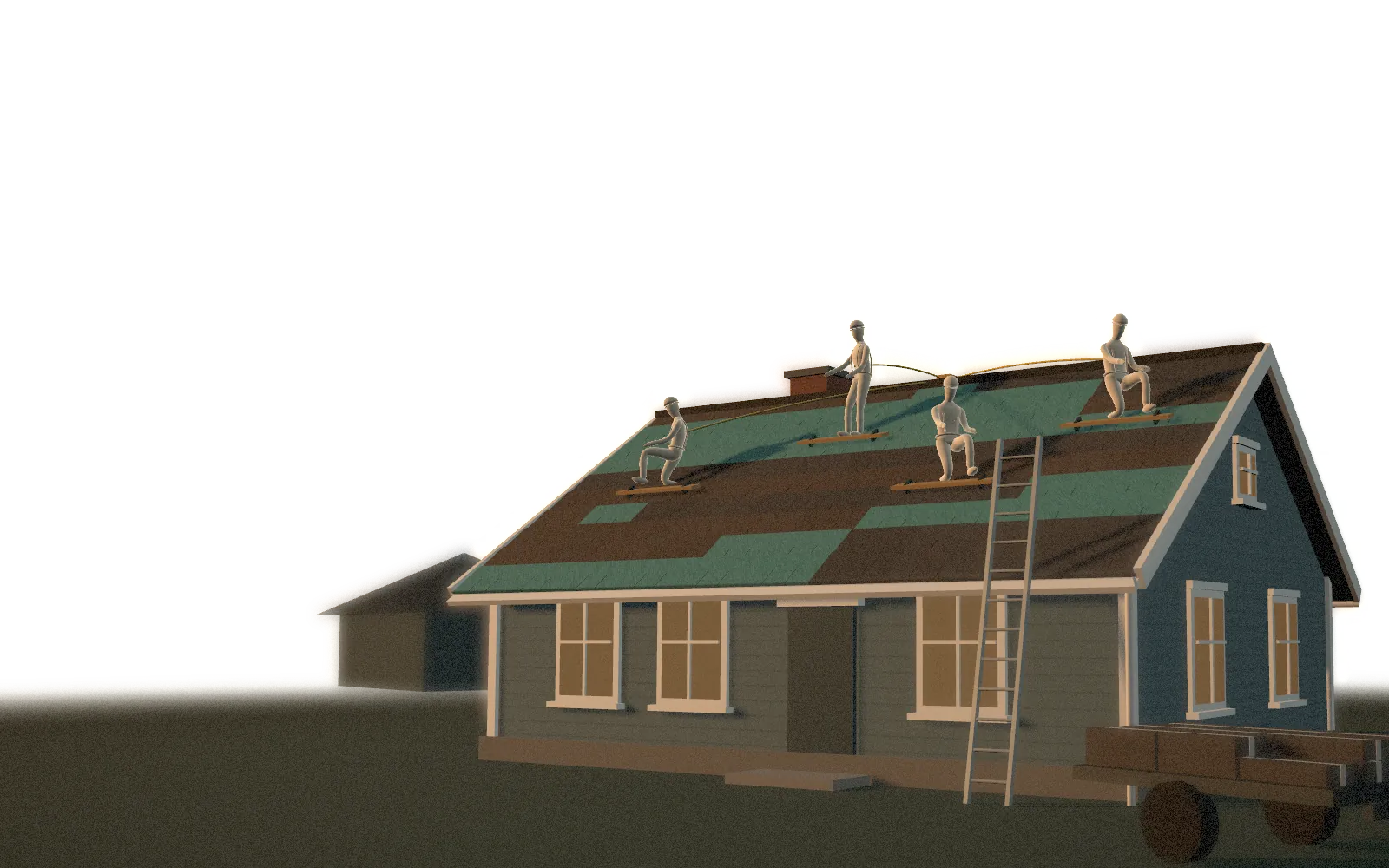
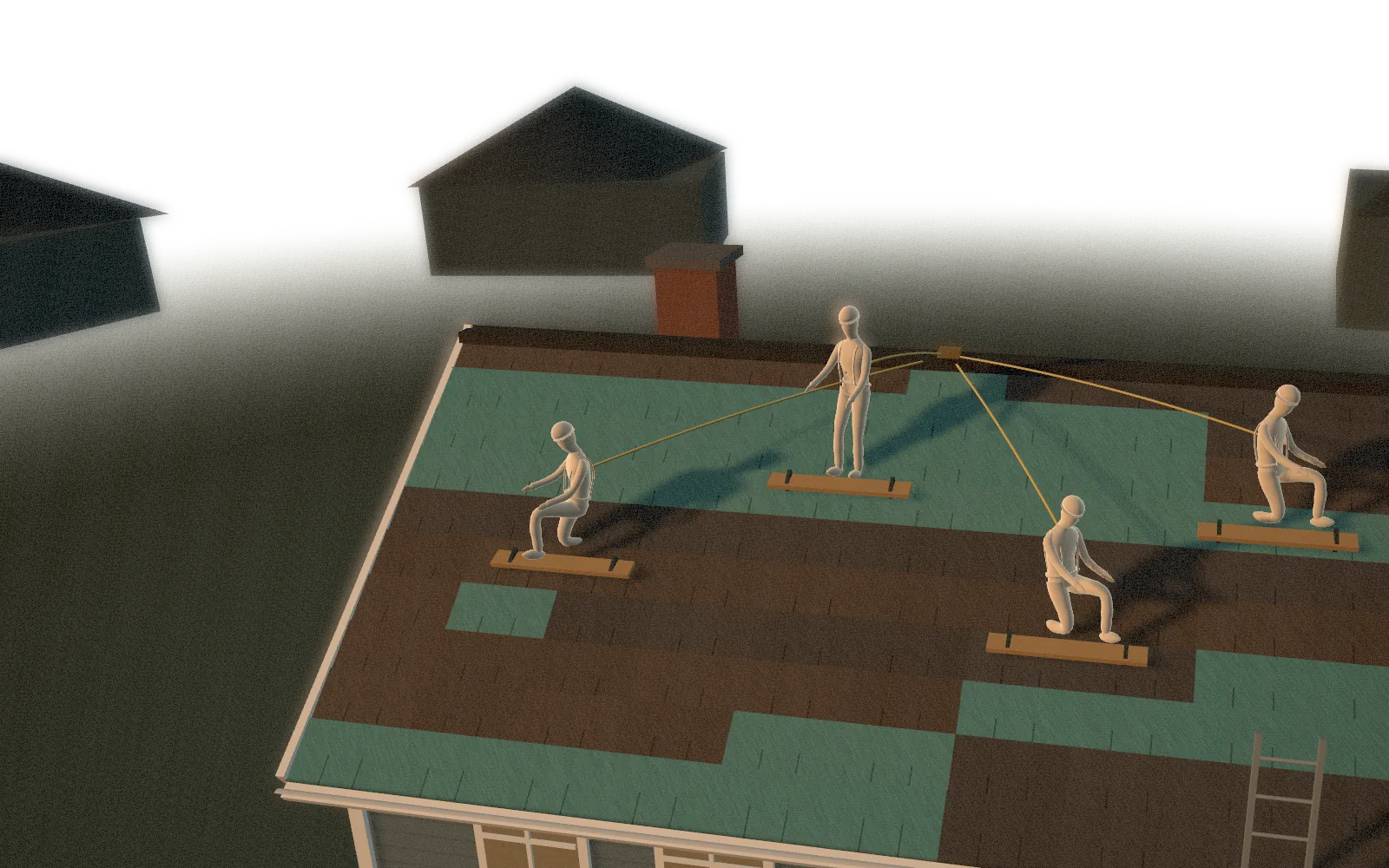
The storm behind the house
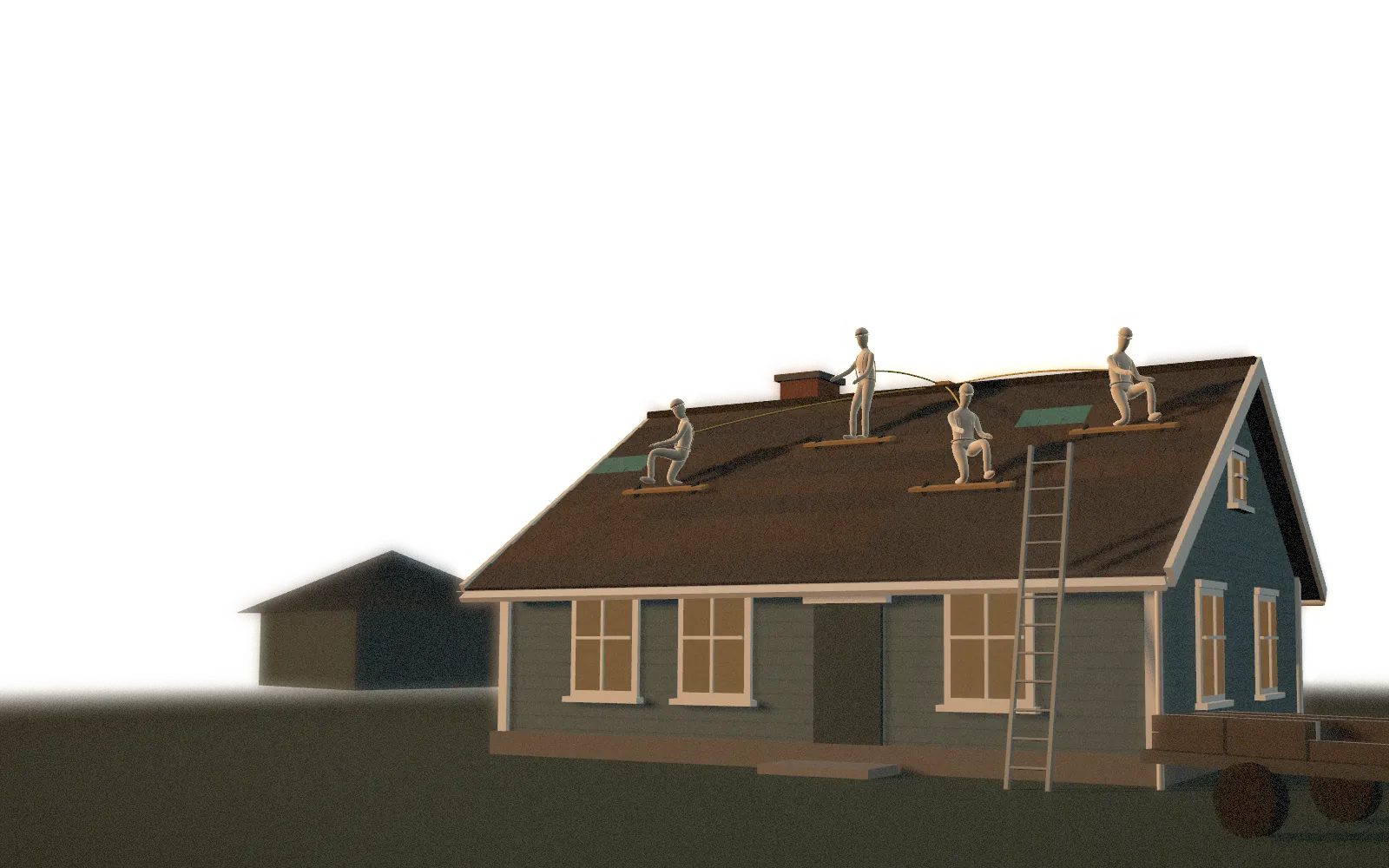
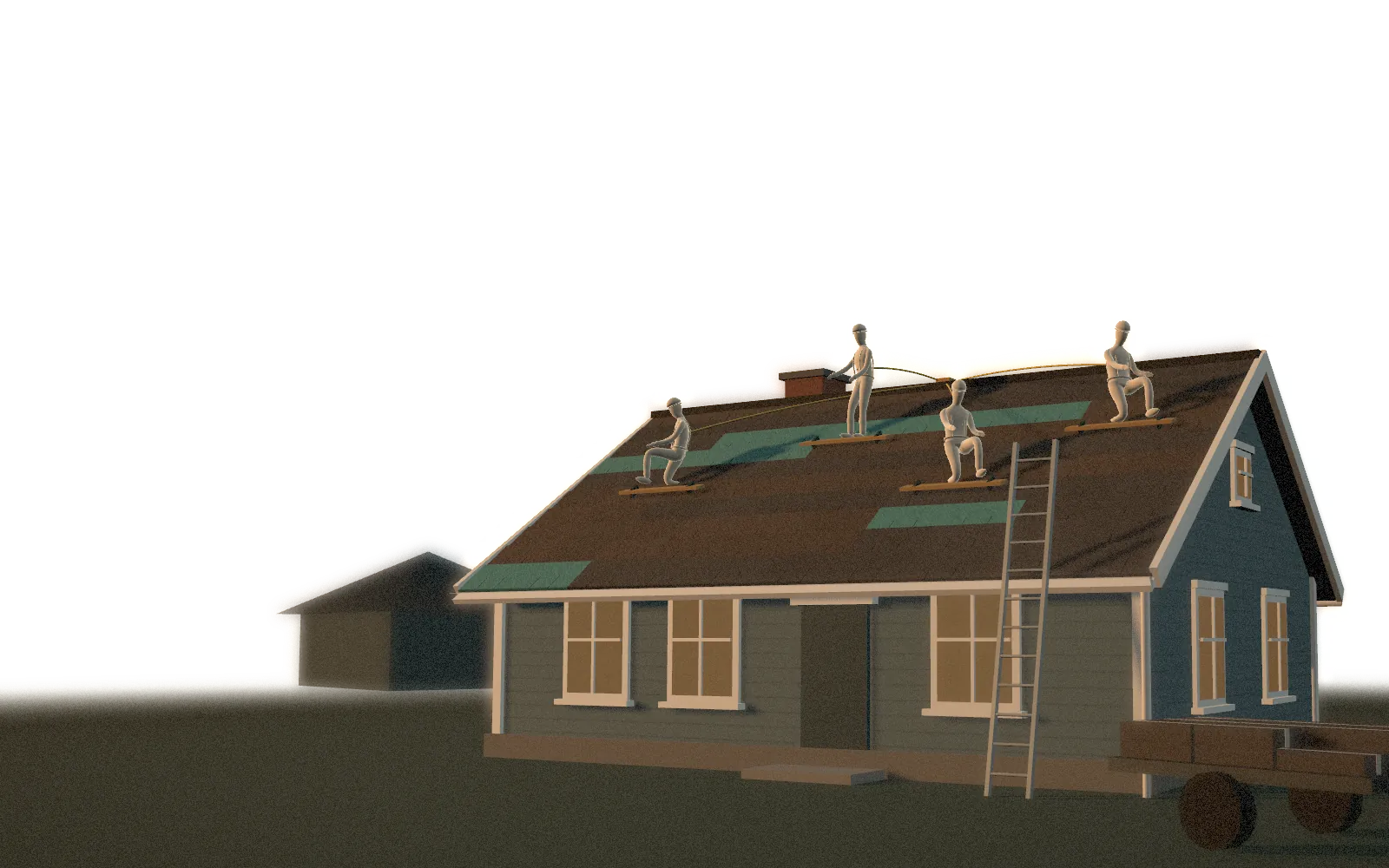
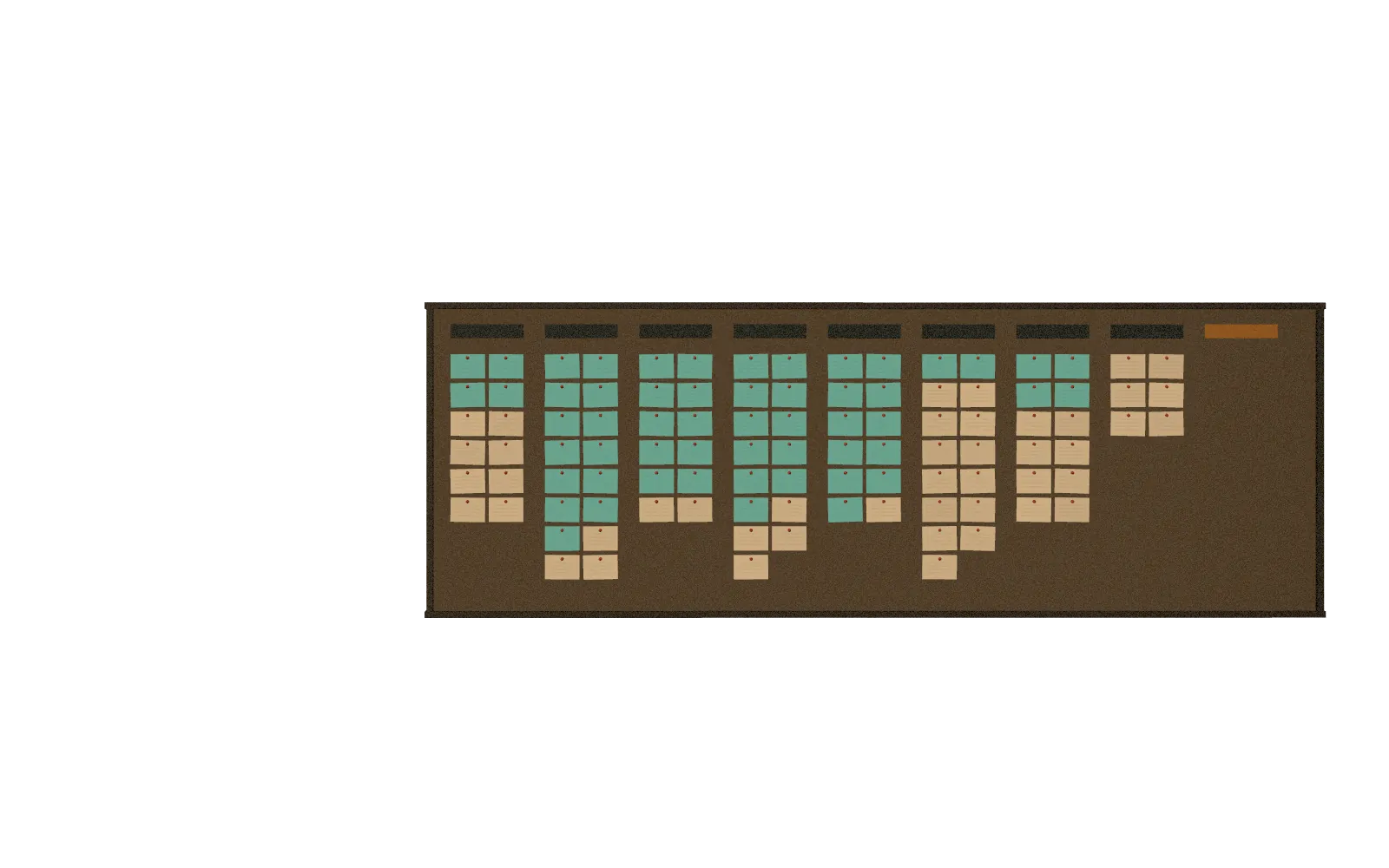
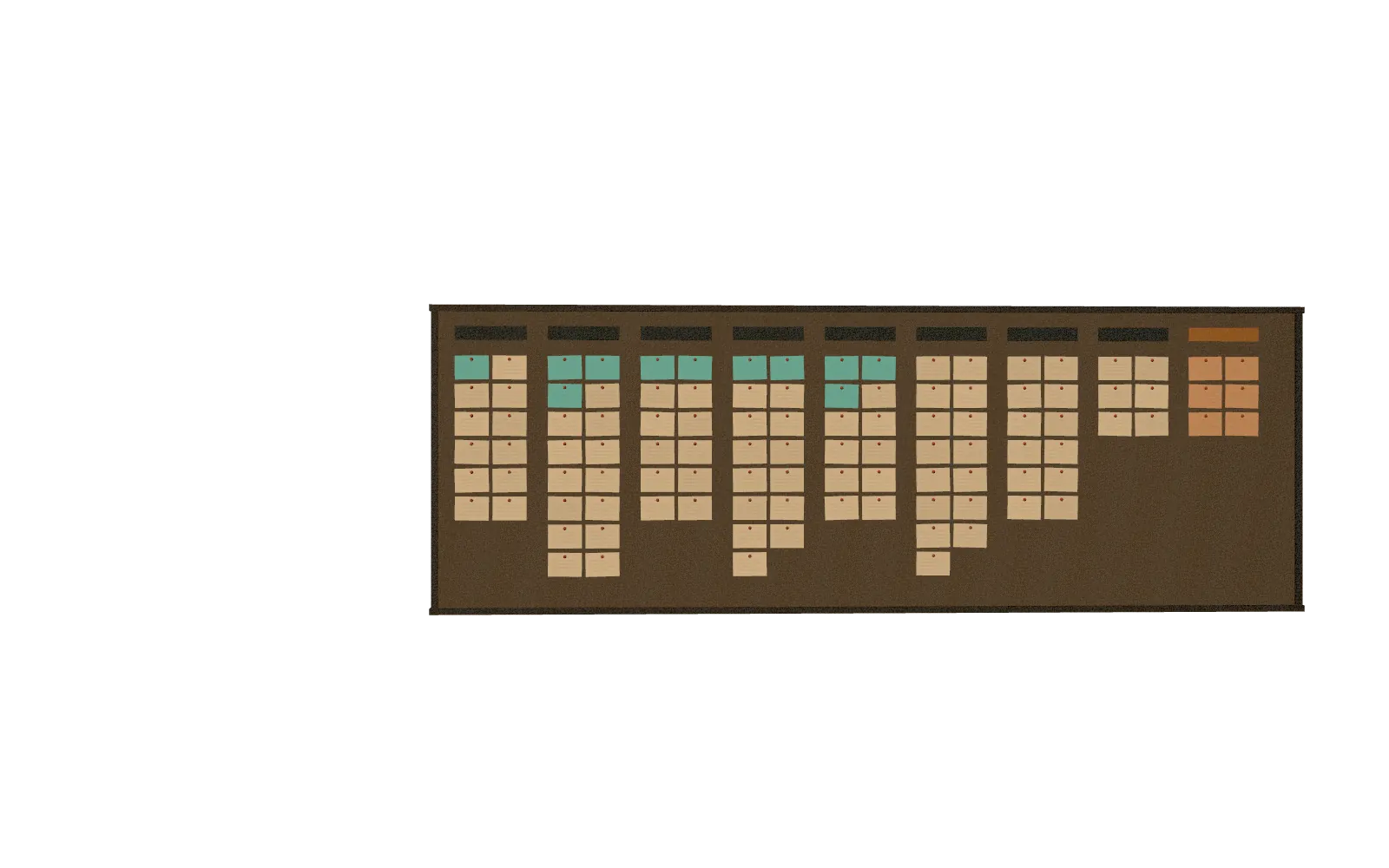
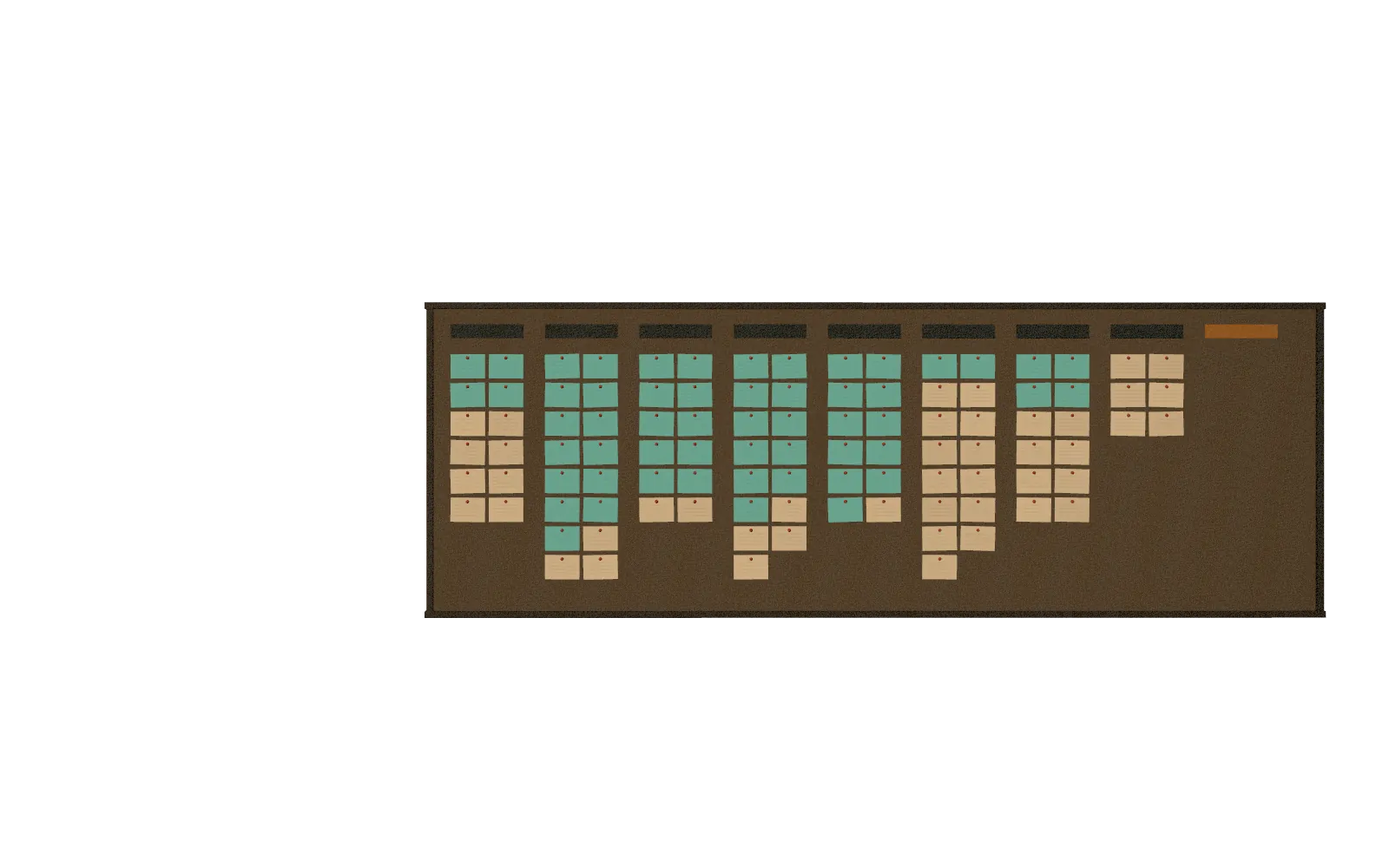
Tear-offTear-offTear-offTear-offTear-offTear-offTear-offTear-offTear-offTear-offTear-offTear-offTear-offTear-offDeck repairDeck repairDeck repairDeck repairDeck repairDeck repairDeck repairDeck repairDeck repairDeck repairDeck repairDeck repairUnderlaymentUnderlaymentUnderlaymentUnderlaymentUnderlaymentUnderlaymentUnderlaymentUnderlaymentUnderlaymentUnderlaymentUnderlaymentUnderlaymentFlashingFlashingFlashingFlashingFlashingFlashingFlashingFlashingFlashingFlashingFlashingFlashingRig safe accessRig safe accessRig safe accessRig safe accessRig safe accessRig safe accessRig safe accessRig safe accessRig safe accessRig safe accessMove materialsMove materialsMove materialsMove materialsMove materialsMove materialsMove materialsMove materialsMove materialsMove materialsMove materialsMove materialsInstall coveringInstall coveringInstall coveringInstall coveringInstall coveringInstall coveringInstall coveringInstall coveringInstall coveringInstall coveringInstall coveringInstall coveringInstall coveringInstall coveringInstall coveringInstall coveringInstall coveringInstall coveringInstall coveringInstall coveringInstall coveringInstall coveringInspect and hand overInspect and hand overInspect and hand overInspect and hand overInspect and hand overInspect and hand over

42of 100

hours of roof work done by machines, Aggressive scenario

What this shows

Exact value: 42.3 of every 100 hours (hours of roof work done by machines, Aggressive scenario).

Hours, not people. The crew stays on the roof.

Machine hours count human work replaced, not machine runtime.

Each zone is rounded so the zones add up to the total.

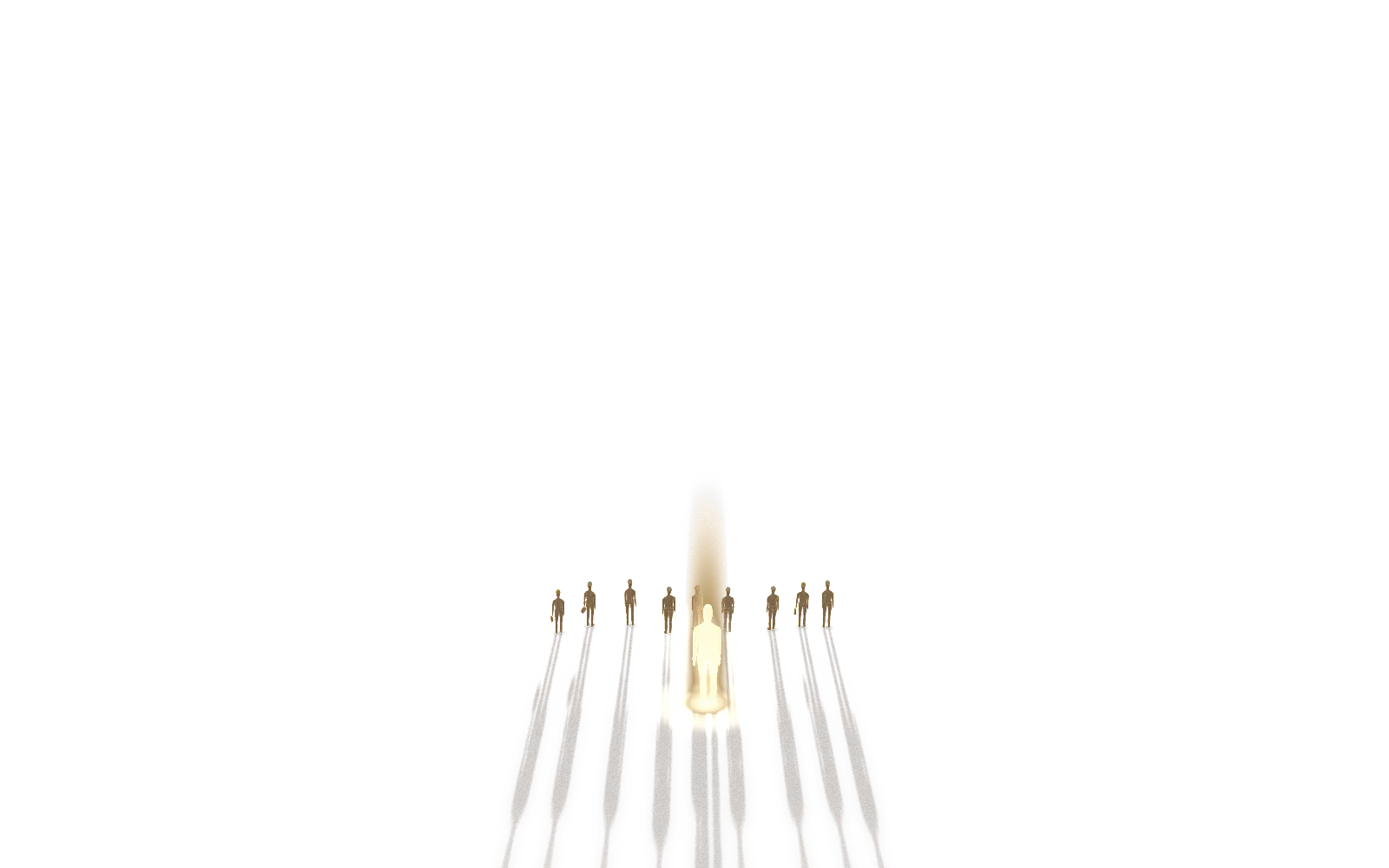
The people walking into the yard show newcomers looking for roofing work. They are an illustration, not a count: the model's assumption is 3, 10 or 20 new people per 100 roofers (Mild, Moderate, Aggressive).

Labels on this scene

  • Picture Storm film: generated illustration · mood only.
  • Foundation's model, not a forecast The number on screen. Now one roof: 100 hours of work. In the Moderate scenario, machines take 14 of every 100 hours. In the hardest case, machines do 42 of every 100 hours. In the model, more people look for roofing work.
  • Economist's summary · Bessen Power looms took over 98% of the work needed to weave each yard of cloth.

In the model, how much roof work do machines take, and what happens to the crew?

You see that machine hours are not missing roofers.

Machine hours count human work replaced, not machine runtime. In the Aggressive scenario people still put in about 60 hours on this roof, because the model adds back support hours.

Pay in the Aggressive scenario: roofing pay ends about 15% below where it started, office pay about 5% below. Each index starts at 100 in its own market. Not dollars.

New people looking for roofing work: 3, 10 or 20 per 100 roofers (an assumption). They never come from the office crowd.
See the exact numbers
One roof, 100 hours of work: machine hours by task zone. Hours, not people. The crew stays on the roof.
Task zoneHourshours of roof work done by machines, Mild scenariohours of roof work done by machines, Moderate scenariohours of roof work done by machines, Aggressive scenario
Tear-off140 (2%)2 (10%)6 (45%)
Deck repair120 (0%)0 (2%)2 (15%)
Underlayment120 (2%)2 (15%)6 (50%)
Flashing120 (0%)0 (1%)1 (10%)
Rig safe access100 (0%)0 (0%)0 (0%)
Move materials121 (5%)4 (30%)10 (80%)
Install covering221 (4%)6 (28%)16 (75%)
Inspect and hand over60 (0%)0 (3%)1 (15%)
All zones1002 of 100 (exact 2.0)14 of 100 (exact 13.5)42 of 100 (exact 42.3)

Foundation's model, not a forecast

  • Model output In Foundation's model at model year 6, machines do about 2 of every 100 hours of roof work in the Mild scenario, 14 in Moderate and 42 in Aggressive. People still put in about 98, 88 and 60 hours on the same roof. Source: Foundation Projects - The work above us - scenario data (scenario-data).
  • Scenario assumption One roof's 100 hours are split into the roofer's eight tasks by the authors' time weights: rig safe access 10, move materials 12, tear-off 14, deck repair 12, underlayment 12, install covering 22, flashing 12, inspect and hand over 6. Source: Foundation Projects - The work above us - scenario data (scenario-data).
  • Derived arithmetic In the hardest scenario the 42 machine hours fall by task: move materials 10, tear-off 6, deck repair 2, underlayment 6, install covering 16, flashing 1, inspect and hand over 1, rig safe access 0. Source: Foundation Projects - The work above us - task bundles (task-bundles).
  • Scenario assumption The share of each task done by machines or AI agents at model year 6, in each scenario. The authors chose these shares. Source: Foundation Projects - The work above us - task bundles (task-bundles).
  • Scenario assumption Hours done by machines or agents count the human work they replace, not how long the machine runs. Source: Foundation Projects - The work above us (article text, 2026-10-03).
  • Scenario assumption For every hour of work machines take over, the model adds support time: 0.10 hours for office work and 0.15 hours for roof work. Source: Foundation Projects - The work above us (article text, 2026-10-03).
  • Attribution Power looms took over 98% of the work needed to weave each yard of cloth. Weaving jobs still grew. Source: IMF F&D 2015 - Bessen, Toil and Technology (Wayback).
  • Scenario assumption By model year 6, new qualified people looking for roofing work equal 3%, 10% or 20% of starting roofing employment (Mild, Moderate, Aggressive). This is an assumption, not an observed flow. Source: Foundation Projects - The work above us (article text, 2026-10-03).
  • Model output At model year 6, office pay ends at 100.0, 99.6 and 95.3, and roofing pay at 98.5, 94.5 and 85.0 (Mild, Moderate, Aggressive). Source: Foundation Projects - The work above us (article text, 2026-10-03).
  • Editorial Each pay index starts at 100 in its own job market. The numbers are not dollar comparisons. Source: Foundation Projects - The work above us (article text, 2026-10-03); Foundation Projects - The work above us - data README (README).
  • Scenario assumption The way roofing pay responds in the model is a chosen rule, not an estimate from real roofing markets. Source: Foundation Projects - The work above us (article text, 2026-10-03).
Teal = hours machines do

Now one roof.

  1. Now one roof: 100 hours of work. Each course is 1 hour, not 1 person.

    2 of 100 hours of roof work done by machines, Mild scenario

  2. In the Moderate scenario, machines take 14 of every 100 hours. People still do most of them.

    14 of 100 hours of roof work done by machines, Moderate scenario

  3. In the hardest case, machines do 42 of every 100 hours. 42 hours, not 42 roofers. The crew stays on the roof.

    42 of 100 hours of roof work done by machines, Aggressive scenario

  4. Power looms took over 98% of the work needed to weave each yard of cloth. Weaving jobs still grew.

    42 of 100 hours of roof work done by machines, Aggressive scenario

  5. In the model, more people look for roofing work. And each roof needs fewer hours from people.

    42 of 100 hours of roof work done by machines, Aggressive scenario

Your choice.Follow the next part ↓
Open land under a storm on the left, the light breaking through on the right
You

Drag or hold your figure

The model's 15 don't change. What you do next does.

Your choice and your role

Take part, or wait?

  1. Nobody can stop this. Not us, not anyone.

  2. Take part, or wait?

What do you do next?

What this shows

Labels on this scene

  • Picture Sky film: generated illustration · mood only.
  • Our view, not the model Take part: Taking part means learning the new tools early. Wait and see: Waiting is a choice too. Take part, or wait?
  • Our view Nobody can stop this.

Your choice goes on your plan card. The model numbers do not change.

  • Editorial Nobody can stop this. Not us, not anyone. You decide what you do next. Taking part means learning the new tools early, and having a say in how they're used. Waiting is a choice too. The change comes anyway. The model's 15 don't change. What you do next does.
What changes for you.Follow the next part ↓
Roofing business owners

The owner's path

What changes for my company?

Scene unavailable. The poster frame and the words in HTML

A generated film: an owner's hands on the wheel at dawn, watching the crews load up in the yard

You run the company.

  1. You run the company. Here's what changes for you.

Your office changes first. Weather still rules the roof. Your people decide how well it goes.

What this shows

Labels on this scene

  • Picture Owner film: generated illustration.

What changes for a roofing company owner?

Your office changes first. Weather still rules the roof. Your people decide how well it goes.

You know this path is about your company.

  • Editorial framing AI is changing office work. Robots may change roof work. That is the paper's framing. Source: Foundation Projects - The work above us (article text, 2026-10-03).
Your office.Follow the next part ↓

Scene unavailable. The poster frame and the words in HTML

A small roofing office in the early morning, softened behind the job board; the screen draws a roof outline
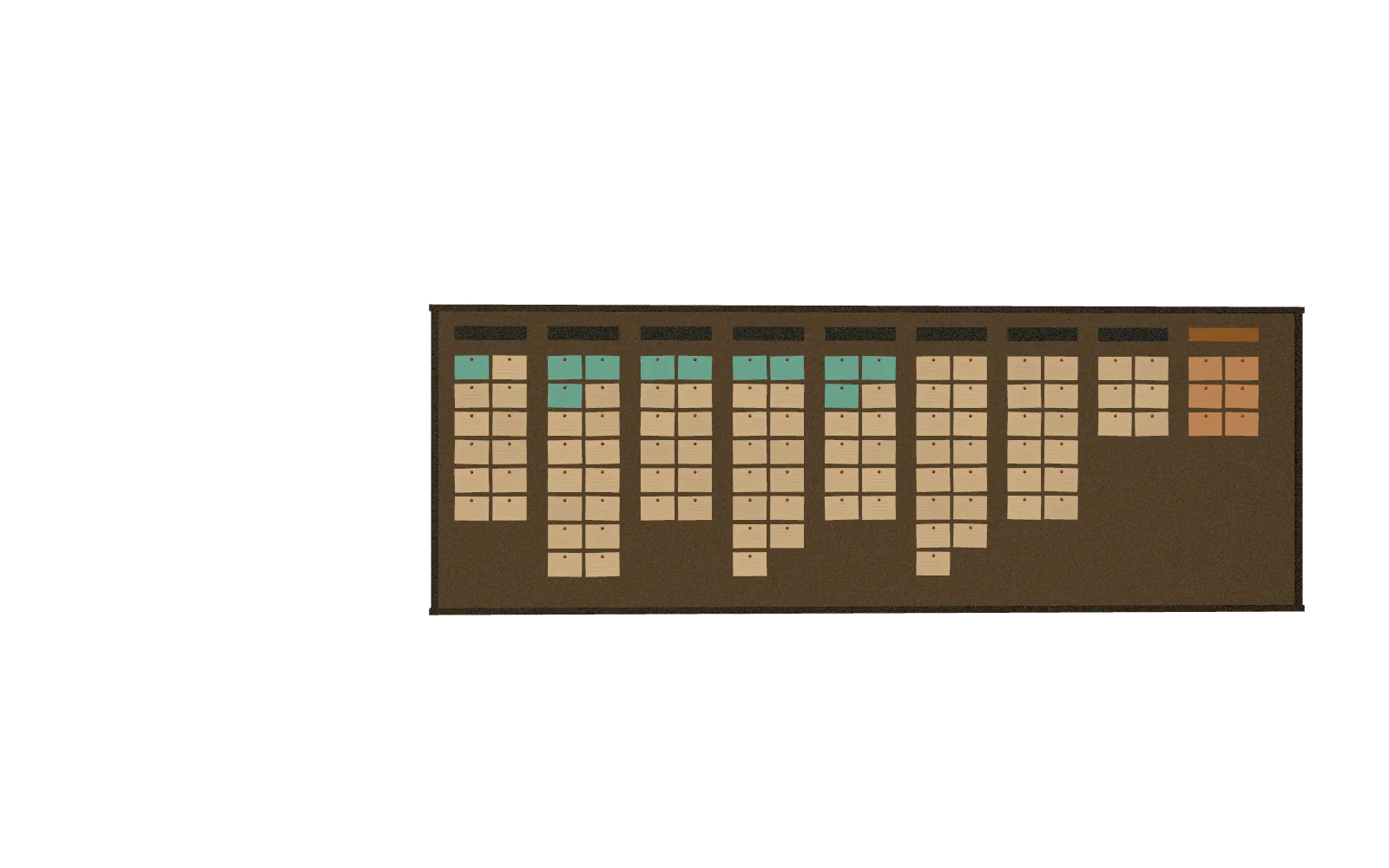
InspectBuildOrderScheduleTrackCheckCoordinateHandleNew

55of 100

office hours done by AI agents · hardest case

What this shows

Exact value: 55.25 of every 100 hours (office hours done by AI agents · hardest case).

New work for people: 0.00 hours per 100, shown as 0 gold cards.

Hours, not people.

Gold cards are hours of new work, not new hires.

Task names come from O*NET task statements for construction managers and supervisors.

Support time still applies: the model adds 0.10 hours of support for every office hour AI agents take over.

Each task is rounded so the tasks add up to the total.

Labels on this scene

  • Picture Office film: generated illustration.
  • Foundation's model, not a forecast The number on screen. Take one office job: the production manager. In the hardest case, AI agents do about 55 of its 100 hours. New work for people doesn't appear by itself.
  • Our view New work for people doesn't appear by itself.

How much of one office job could AI agents do in the model?

You know where the first hours move, and that new roles have to be built.

Mild: about 11 of 100 hours. Moderate: about 32. Aggressive: about 55. Our arithmetic from the authors' task shares.

New human work the model adds: about 5.73 hours per 100 (Mild), 7.96 (Moderate), none (Aggressive), shown as 6, 8 and 0 gold cards.

Support time still applies: the model adds 0.10 hours of support for every office hour AI agents take over.

Track costs and progress: AI agents do 95% of it in the Aggressive scenario. Build the estimate: 80%. The authors' assumptions.

Task names come from O*NET task statements for construction managers and supervisors.

See the exact numbers
One office job, 100 hours of work: hours done by AI agents, by task. Hours, not people.
TaskHoursoffice hours done by AI agents · Mildoffice hours done by AI agents · Moderateoffice hours done by AI agents · hardest case
Inspect the roof121 (5%)2 (15%)4 (35%)
Build the estimate163 (20%)8 (50%)13 (80%)
Order materials122 (15%)6 (50%)10 (85%)
Schedule the crew152 (15%)6 (40%)11 (75%)
Track costs and progress123 (25%)9 (70%)11 (95%)
Check safety and quality150 (0%)0 (2%)2 (10%)
Coordinate people120 (5%)1 (10%)4 (30%)
Handle surprises60 (0%)0 (2%)0 (5%)
All tasks10011 of 10032 of 10055 of 100
New work for people—680

Foundation's model, not a forecast

  • Derived arithmetic Take the production manager's 100 office hours: AI agents do about 11 in the Mild scenario, 32 in Moderate and 55 in Aggressive. Source: Foundation Projects - The work above us - task bundles (task-bundles).
  • Derived arithmetic The model adds new human work for the production manager: about 6 hours per 100 in Mild, 8 in Moderate and none in Aggressive. Source: Foundation Projects - The work above us - task bundles (task-bundles); Foundation Projects - The work above us - data README (README).
  • Scenario assumption The share of each task done by machines or AI agents at model year 6, in each scenario. The authors chose these shares. Source: Foundation Projects - The work above us - task bundles (task-bundles).
  • Official description The production manager's eight task names come from O*NET task statements for construction managers (11-9021) and construction supervisors (47-1011). Source: O-NET OnLine - 11-9021.00 Construction Managers (fetched 2026-10-03); O-NET OnLine - 47-1011.00 First-Line Supervisors of Construction Trades (fetched 2026-10-03); Foundation Projects - The work above us (article text, 2026-10-03).
  • Editorial New human roles must be designed and supported. They do not appear by themselves. Source: Foundation Projects - The work above us (article text, 2026-10-03).
  • Scenario assumption In the Aggressive scenario the model adds no new teaching and improvement work. Support work still applies. Source: Foundation Projects - The work above us - data README (README); Foundation Projects - The work above us - task bundles (task-bundles).
  • Scenario assumption Gold boxes are added hours of human work, not new hires. Source: Foundation Projects - The work above us (article text, 2026-10-03).
  • Scenario assumption For every hour of work machines take over, the model adds support time: 0.10 hours for office work and 0.15 hours for roof work. Source: Foundation Projects - The work above us (article text, 2026-10-03).
New work for people

Your office changes first.

  1. Take one office job: the production manager. Each card is 1 hour of its work.

    11 of 100 office hours done by AI agents · Mild

  2. In the hardest case, AI agents do about 55 of its 100 hours.

    55 of 100 office hours done by AI agents · hardest case

  3. New work for people doesn't appear by itself. In the Aggressive scenario, the model adds no new teaching or improvement work.

    55 of 100 office hours done by AI agents · hardest case

What rain does to machines.Follow the next part ↓

Scene unavailable. The poster frame and the words in HTML

An imagined future: a hauling machine sits idle and powered down in heavy rain at a job site; water runs off the tarp and the pallet cover

One question for every robot vendor.

  1. Ask every robot vendor one question: what does each accepted task cost?

No. Roofers stop for bad weather and winter, and we assume machines would too. So judge a machine by what each accepted task costs.

What this shows

Labels on this scene

  • Picture Imagined future. Generated illustration, not footage.
  • Our view Ask every robot vendor one question: what does each accepted task cost?

Does a roofing robot work every hour of the year?

No. Roofers stop for bad weather and winter, and we assume machines would too. So judge a machine by what each accepted task costs.

You have one question to ask any robot vendor.

Rain stops roofers. We assume it stops machines too.

BLS says roofers usually do not work in bad weather, and that in northern states roofing work may be limited in winter.

An 8-month season is about 1,280 working hours, about half a factory year.

Seasons of 6, 8, 10 and 12 months are about 960, 1,280, 1,600 and 1,920 working hours. A machine's fixed cost per working hour is then about 2.7, 2.0, 1.6 and 1.35 times what it is over a 2,600-hour factory year. Our arithmetic.

Cost per accepted task: work your customer accepts and your warranty covers.

  • Official description BLS says roofers usually don't work in bad weather. Source: U.S. BLS Occupational Outlook Handbook - Roofers (Wayback capture 2026-09-20).
  • Official description BLS says that in northern states, roofing work may be limited in winter. Source: U.S. BLS Occupational Outlook Handbook - Roofers (Wayback capture 2026-09-20).
  • Our assumption We assume a machine working on a roof would also stop for bad weather and winter.
  • Authored example + Derived arithmetic Example roofing season: 8 months x 20 days x 8 hours = 1,280 working hours, or 160 eight-hour days. That is about half the factory year.
  • Derived arithmetic Figure's BMW shift pattern (10 hours, Monday to Friday) run every weekday for a year is about 2,600 hours. Source: Figure AI - Production at BMW (figure.ai, fetched 2026-10-03).
  • Derived arithmetic If a machine costs the same per year either way, its fixed cost per working hour grows as 2,600 divided by your working hours. Source: Figure AI - Production at BMW (figure.ai, fetched 2026-10-03); Foundation Projects - The work above us (article text, 2026-10-03).
  • Derived arithmetic + Authored example Example seasons of 6, 8, 10 and 12 months are about 960, 1,280, 1,600 and 1,920 working hours. Against a 2,600-hour factory year, a machine's fixed cost per working hour is about 2.7, 2.0, 1.6 and 1.35 times as high. Source: Figure AI - Production at BMW (figure.ai, fetched 2026-10-03).
  • Editorial The test that matters is cost per accepted task: work your customer accepts and your warranty covers. Not the purchase price or the hours a machine is switched on. Source: Foundation Projects - The work above us (article text, 2026-10-03).
What taking part looks like.Follow the next part ↓

Scene unavailable. The poster frame and the words in HTML

A generated film: an instructor guides a hauling machine up a practice ramp while trainees watch

Taking part, for owners.

  1. Let your crew help pick what changes. Train people before work moves.

Let your crew help pick what changes, and train people before work moves.

What this shows

Labels on this scene

  • Picture Generated illustration · practice rig.
  • Our view Let your crew help pick what changes.

What does taking part look like for an owner?

Let your crew help pick what changes, and train people before work moves.

You leave with a first step for your company.

People keep clear authority to accept quality and to stop unsafe work.

Training and income should continue before paid work goes away.

  • Editorial A responsible approach starts with crews helping pick the work worth changing. People keep clear authority to accept quality and to stop unsafe work. Source: Foundation Projects - The work above us (article text, 2026-10-03).
  • Editorial Training and income should continue before paid work goes away. New roles need real demand, fair pay and a way to qualify. New people need a way to learn. Source: Foundation Projects - The work above us (article text, 2026-10-03).
  • Editorial My plan to take part. Owner: let my crew help pick the first task to test; ask every robot vendor for cost per accepted task. Office team: learn to run the AI tools and check their work; own the customer conversation. Crew: learn the machines before they show up; teach the next roofer; ask who owns the recordings of my work.
The future we can build.Follow the next part ↓
Office teams

The office's path

What changes in the office?

Scene unavailable. The poster frame and the words in HTML

A generated film: a person on a headset keeps a roofing office running

You keep the office running.

  1. You keep the office running. In our model, your work changes first.

In the model your work changes first. Records, estimates, orders and schedules move most. Safety checks and surprises stay mostly with people.

What this shows

Labels on this scene

  • Picture Front-desk film: generated illustration · mood only.
  • Foundation's model, not a forecast You keep the office running.

What changes for people who work in a roofing office?

In the model your work changes first. Records, estimates, orders and schedules move most. Safety checks and surprises stay mostly with people.

You know which of your tasks move and which stay.

In the model, AI changes office work from the start. Machines start on roof tasks only after model year 2.

  • Scenario assumption In the model, AI changes office work from the start. Machines start on roof tasks only after model year 2. Source: Foundation Projects - The work above us (article text, 2026-10-03).
Your week, in hours.Follow the next part ↓

Scene unavailable. The poster frame and the words in HTML

A small roofing office in the early morning, softened behind the job board; the screen draws a roof outline
InspectBuildOrderScheduleTrackCheckCoordinateHandleNew

55of 100

office hours done by AI agents · hardest case

What this shows

Exact value: 55.25 of every 100 hours (office hours done by AI agents · hardest case).

New work for people: 0.00 hours per 100, shown as 0 gold cards.

Hours, not people.

Gold cards are hours of new work, not new hires.

Task names come from O*NET task statements for construction managers and supervisors.

Support time still applies: the model adds 0.10 hours of support for every office hour AI agents take over.

Each task is rounded so the tasks add up to the total.

Labels on this scene

  • Picture Office film: generated illustration.
  • Foundation's model, not a forecast The number on screen. Take one office job: the production manager. In the hardest case, AI agents do about 55 of its 100 hours.
  • Our view Safety checks and surprises stay mostly with people.

How much of one office job could AI agents do in the model?

You know which of your tasks move and which stay.

Build the estimate: AI agents do 80% of it in the Aggressive scenario. Track costs and progress: 95%. The authors' assumptions.

Mild: about 11 of 100 hours. Moderate: about 32. Our arithmetic from the authors' task shares.

See the exact numbers
One office job, 100 hours of work: hours done by AI agents, by task. Hours, not people.
TaskHoursoffice hours done by AI agents · Mildoffice hours done by AI agents · Moderateoffice hours done by AI agents · hardest case
Inspect the roof121 (5%)2 (15%)4 (35%)
Build the estimate163 (20%)8 (50%)13 (80%)
Order materials122 (15%)6 (50%)10 (85%)
Schedule the crew152 (15%)6 (40%)11 (75%)
Track costs and progress123 (25%)9 (70%)11 (95%)
Check safety and quality150 (0%)0 (2%)2 (10%)
Coordinate people120 (5%)1 (10%)4 (30%)
Handle surprises60 (0%)0 (2%)0 (5%)
All tasks10011 of 10032 of 10055 of 100
New work for people—680

Foundation's model, not a forecast

  • Derived arithmetic Take the production manager's 100 office hours: AI agents do about 11 in the Mild scenario, 32 in Moderate and 55 in Aggressive. Source: Foundation Projects - The work above us - task bundles (task-bundles).
  • Derived arithmetic The model adds new human work for the production manager: about 6 hours per 100 in Mild, 8 in Moderate and none in Aggressive. Source: Foundation Projects - The work above us - task bundles (task-bundles); Foundation Projects - The work above us - data README (README).
  • Scenario assumption The share of each task done by machines or AI agents at model year 6, in each scenario. The authors chose these shares. Source: Foundation Projects - The work above us - task bundles (task-bundles).
  • Official description The production manager's eight task names come from O*NET task statements for construction managers (11-9021) and construction supervisors (47-1011). Source: O-NET OnLine - 11-9021.00 Construction Managers (fetched 2026-10-03); O-NET OnLine - 47-1011.00 First-Line Supervisors of Construction Trades (fetched 2026-10-03); Foundation Projects - The work above us (article text, 2026-10-03).
  • Derived arithmetic In our model, records, estimates, orders and schedules move the most. Safety checks and surprises stay mostly with people. Source: Foundation Projects - The work above us - task bundles (task-bundles).
  • Our reading Our reading of the authors' shares: repeated work changes most. Flashing, deck repair, safety checks and handling surprises stay mostly with people. Source: Foundation Projects - The work above us (article text, 2026-10-03).
  • Scenario assumption Gold boxes are added hours of human work, not new hires. Source: Foundation Projects - The work above us (article text, 2026-10-03).
New work for people

Your week, in hours.

  1. Take one office job: the production manager. Each card is 1 hour of its work.

    11 of 100 office hours done by AI agents · Mild

  2. In the hardest case, AI agents do about 55 of its 100 hours. Records, estimates, orders and schedules move the most.

    55 of 100 office hours done by AI agents · hardest case

  3. Safety checks and surprises stay mostly with people.

    55 of 100 office hours done by AI agents · hardest case

The conversation.Follow the next part ↓

Scene unavailable. The poster frame and the words in HTML

A generated film: a person on a headset takes a call at a roofing front desk

The conversation stays.

  1. Machines took over connecting calls. People took over the conversation.

  2. AI can draft the estimate. People still earn the customer's trust.

The conversation. Machines took over connecting calls; people took over the conversation. AI can draft the estimate; people earn the customer's trust.

What this shows

Labels on this scene

  • Picture Front-desk film: generated illustration · mood only.
  • Economist's summary · Bessen Machines took over connecting calls.
  • Our view AI can draft the estimate.

What part of office work stays with people?

The conversation. Machines took over connecting calls; people took over the conversation. AI can draft the estimate; people earn the customer's trust.

You see where your value moves.

  • Attribution Machines took over connecting calls. People took over the conversation. Source: IMF F&D 2015 - Bessen, Toil and Technology (Wayback); BLS Monthly Labor Review 2006 - Wyatt and Hecker, Occupational changes during the 20th century (Wayback).
  • Editorial AI can draft the estimate. People still earn the customer's trust.
What taking part looks like.Follow the next part ↓

Scene unavailable. The poster frame and the words in HTML

A generated film: an instructor guides a hauling machine up a practice ramp while trainees watch

Taking part, for office teams.

  1. Learn to run the AI tools and check their work. Own the customer conversation.

Learn to run the AI tools and check their work. Own the customer conversation.

What this shows

Labels on this scene

  • Picture Generated illustration · practice rig.
  • Our view Learn to run the AI tools and check their work.

What does taking part look like in the office?

Learn to run the AI tools and check their work. Own the customer conversation.

You leave with a first step, and a reason to share this with your owner.

  • Editorial Training and income should continue before paid work goes away. New roles need real demand, fair pay and a way to qualify. New people need a way to learn. Source: Foundation Projects - The work above us (article text, 2026-10-03).
  • Editorial New work for people: setting up machines, supervising new equipment, and trying out safer methods, then teaching them. Source: Foundation Projects - The work above us (article text, 2026-10-03).
  • Editorial My plan to take part. Owner: let my crew help pick the first task to test; ask every robot vendor for cost per accepted task. Office team: learn to run the AI tools and check their work; own the customer conversation. Crew: learn the machines before they show up; teach the next roofer; ask who owns the recordings of my work.
The future we can build.Follow the next part ↓
Roofers and crews

The crew's path

What changes on the roof?

Scene unavailable. The poster frame and the words in HTML

A generated film: roofers tied off to ridge anchors at first light

You work on the roof.

  1. You work on the roof. Here's what changes for you.

Some roof hours may move to machines. Your skill is in the hours that stay.

What this shows

Labels on this scene

  • Picture Crew film: generated illustration · mood only.

What changes for roofers and crews?

Some roof hours may move to machines. Your skill is in the hours that stay.

You know this path is about your hours on the roof.

  • Editorial framing AI is changing office work. Robots may change roof work. That is the paper's framing. Source: Foundation Projects - The work above us (article text, 2026-10-03).
Which of your hours could change.Follow the next part ↓

Scene unavailable. The poster frame and the words in HTML

A generated sky: the storm moves off and low sun breaks through
Tear-offTear-offTear-offTear-offTear-offTear-offTear-offTear-offTear-offTear-offTear-offTear-offTear-offTear-offDeck repairDeck repairDeck repairDeck repairDeck repairDeck repairDeck repairDeck repairDeck repairDeck repairDeck repairDeck repairUnderlaymentUnderlaymentUnderlaymentUnderlaymentUnderlaymentUnderlaymentUnderlaymentUnderlaymentUnderlaymentUnderlaymentUnderlaymentUnderlaymentFlashingFlashingFlashingFlashingFlashingFlashingFlashingFlashingFlashingFlashingFlashingFlashingRig safe accessRig safe accessRig safe accessRig safe accessRig safe accessRig safe accessRig safe accessRig safe accessRig safe accessRig safe accessMove materialsMove materialsMove materialsMove materialsMove materialsMove materialsMove materialsMove materialsMove materialsMove materialsMove materialsMove materialsInstall coveringInstall coveringInstall coveringInstall coveringInstall coveringInstall coveringInstall coveringInstall coveringInstall coveringInstall coveringInstall coveringInstall coveringInstall coveringInstall coveringInstall coveringInstall coveringInstall coveringInstall coveringInstall coveringInstall coveringInstall coveringInstall coveringInspect and hand overInspect and hand overInspect and hand overInspect and hand overInspect and hand overInspect and hand over

42of 100

hours of roof work done by machines, Aggressive scenario

What this shows

Exact value: 42.3 of every 100 hours (hours of roof work done by machines, Aggressive scenario).

Hours, not people. Your skill is in the hours that stay.

Five of the eight task names come from O*NET task statements for roofers; three are the authors' own.

Each zone is rounded so the zones add up to the total.

Labels on this scene

  • Picture Sky film: generated illustration · mood only.
  • Foundation's model, not a forecast The number on screen. In the model, machines take the most hours from carrying materials and laying shingles.
  • Our view These are hours, not people.

Which roof tasks lose the most hours to machines in the model?

You see which of your tasks hold their hours.

All roof tasks ramp together after model year 2. The model sets no order between tasks.

Our reading: flashing, deck repair, safety checks and handling surprises stay mostly with people.

See the exact numbers
Your roof, 100 hours of work: machine hours by task zone. Hours, not people. Your skill is in the hours that stay.
Task zoneHourshours of roof work done by machines, Mild scenariohours of roof work done by machines, Moderate scenariohours of roof work done by machines, Aggressive scenario
Tear-off140 (2%)2 (10%)6 (45%)
Deck repair120 (0%)0 (2%)2 (15%)
Underlayment120 (2%)2 (15%)6 (50%)
Flashing120 (0%)0 (1%)1 (10%)
Rig safe access100 (0%)0 (0%)0 (0%)
Move materials121 (5%)4 (30%)10 (80%)
Install covering221 (4%)6 (28%)16 (75%)
Inspect and hand over60 (0%)0 (3%)1 (15%)
All zones1002 of 100 (exact 2.0)14 of 100 (exact 13.5)42 of 100 (exact 42.3)

Foundation's model, not a forecast

  • Derived arithmetic In the model, machines take the most hours from carrying materials and laying shingles. Rigging safe access stays with people in every scenario. Source: Foundation Projects - The work above us - task bundles (task-bundles).
  • Scenario assumption The share of each task done by machines or AI agents at model year 6, in each scenario. The authors chose these shares. Source: Foundation Projects - The work above us - task bundles (task-bundles).
  • Scenario assumption In the model, AI changes office work from the start. Machines start on roof tasks only after model year 2. Source: Foundation Projects - The work above us (article text, 2026-10-03).
  • Our reading Our reading of the authors' shares: repeated work changes most. Flashing, deck repair, safety checks and handling surprises stay mostly with people. Source: Foundation Projects - The work above us (article text, 2026-10-03).
  • Model output In Foundation's model at model year 6, machines do about 2 of every 100 hours of roof work in the Mild scenario, 14 in Moderate and 42 in Aggressive. People still put in about 98, 88 and 60 hours on the same roof. Source: Foundation Projects - The work above us - scenario data (scenario-data).
  • Scenario assumption One roof's 100 hours are split into the roofer's eight tasks by the authors' time weights: rig safe access 10, move materials 12, tear-off 14, deck repair 12, underlayment 12, install covering 22, flashing 12, inspect and hand over 6. Source: Foundation Projects - The work above us - scenario data (scenario-data).
  • Official description Five of the roofer's eight task names come from O*NET task statements for roofers (47-2181). Three are the authors' own task names. Source: O-NET OnLine - 47-2181.00 Roofers (fetched 2026-10-03).

Which of your hours could change.

  1. In the model, machines take the most hours from carrying materials and laying shingles. Rigging safe access stays with people in every scenario.

    42 of 100 hours of roof work done by machines, Aggressive scenario

  2. These are hours, not people. Your skill is in the hours that stay.

    42 of 100 hours of roof work done by machines, Aggressive scenario

What machines would need to learn.Follow the next part ↓

Scene unavailable. The poster frame and the words in HTML

A generated film: a roofer in a capture kit lays a shingle on a practice rig, hands and rig only

Your skill is what machines need to learn.

  1. If machines ever learn roof work, we think they'd learn from recordings of roofers.

  2. Figure says it has paid $15M to people who record everyday tasks for it. It names homes, logistics centers, restaurants, factories and offices, not roofing.

  3. Ask who owns the recordings of your work. We think workers should have a meaningful part in the gains created with their experience and effort.

Recordings of skilled work. So ask who owns the recordings of yours.

What this shows

Labels on this scene

  • Picture Capture film: generated illustration · practice rig. The film is a generated illustration, not Figure's recordings or anyone's.
  • Our view If machines ever learn roof work, we think they'd learn from recordings of roofers. Ask who owns the recordings of your work.
  • Company's own report Figure says it has paid $15M to people who record everyday tasks for it.

What would a machine need from roofers to learn roof work?

Recordings of skilled work. So ask who owns the recordings of yours.

You see that your skill has value, and one question to ask about it.

Figure's Index announcement does not say how people are paid or who owns the recordings.

Machines could also learn from simulation or other methods.

  • Vendor-reported + Our inference Figure trains its robots on Index, a set of recordings of people at work and at home. If machines are ever trained to do roof work, we think they would learn from recordings of roofers. Source: Figure AI - Helix 2.5 zero-shot 30-home generalization (figure.ai, fetched 2026-10-03); Figure AI - Introducing Index (figure.ai, fetched 2026-10-03).
  • Vendor-reported Figure says it has paid $15M to the people who record everyday tasks for it, which it calls Creators. It names tasks at home and in places like logistics centers, restaurants, factories and offices. Source: Figure AI - Introducing Index (figure.ai, fetched 2026-10-03).
  • Our reading Figure's Index announcement (the one we checked) doesn't say how people are paid or who owns the recordings. Source: Figure AI - Introducing Index (figure.ai, fetched 2026-10-03).
  • Foundation position We think workers should have a meaningful part in the gains created with their experience and effort. That is a Foundation position. Whether a particular arrangement delivers it has to be tested against individual outcomes. Source: Foundation Projects - The work above us (article text, 2026-10-03).
What taking part looks like.Follow the next part ↓

Scene unavailable. The poster frame and the words in HTML

A generated film: an instructor guides a hauling machine up a practice ramp while trainees watch

Taking part, for crews.

  1. Learn to run the machines before they show up. Teach the next roofer.

Learn to run the machines before they show up. Teach the next roofer.

What this shows

Labels on this scene

  • Picture Generated illustration · practice rig.
  • Our view Learn to run the machines before they show up.

What does taking part look like for a roofer?

Learn to run the machines before they show up. Teach the next roofer.

You leave with a first step, and a reason to share this with your owner.

New people still need a way in. BLS says trainees start by carrying equipment and material and putting up scaffolds and hoists.

If beginner tasks get easier to automate, there could be fewer ways to learn the trade. The paper calls this an idea to test, not a finding.

  • Editorial New work for people: setting up machines, supervising new equipment, and trying out safer methods, then teaching them. Source: Foundation Projects - The work above us (article text, 2026-10-03).
  • Official description BLS says trainees start by carrying equipment and material and putting up scaffolds and hoists. Within a few months they learn to measure, cut and fit. Later, they lay shingles. Source: U.S. BLS Occupational Outlook Handbook - Roofers (Wayback capture 2026-09-20).
  • Editorial If beginner tasks get easier to automate, there could be fewer ways to learn the trade. The paper calls this an idea to test, not a finding. Source: Foundation Projects - The work above us (article text, 2026-10-03).
  • Editorial My plan to take part. Owner: let my crew help pick the first task to test; ask every robot vendor for cost per accepted task. Office team: learn to run the AI tools and check their work; own the customer conversation. Crew: learn the machines before they show up; teach the next roofer; ask who owns the recordings of my work.
The future we can build.Follow the next part ↓

Scene unavailable. The poster frame and the words in HTML

A generated film: new roof surfaces at sunrise: shingle, metal, solar and clay tile

The future we can build

Roof materials are changing. So are the standards.

FORTIFIED, a stronger roof standard, passed 100,000 designations in 2026.

No. FORTIFIED, a stronger roof standard, passed 100,000 designations in 2026, more than half in the last three years.

What this shows

Labels on this scene

  • Picture Materials film: generated illustration · mood only. The picture behind is a generated illustration, not a FORTIFIED roof or test.
  • Program's own report · IBHS Roof materials are changing. So are the standards. FORTIFIED, a stronger roof standard, passed 100,000 designations in 2026.

Is roofing itself standing still?

No. FORTIFIED, a stronger roof standard, passed 100,000 designations in 2026, more than half in the last three years.

You see roofing already changing for the better.

More than half of the 100,000 were earned in the last three years.

After Hurricane Sally, FORTIFIED homes in Alabama were 55% to 74% less likely to have a loss. Study by the Alabama Department of Insurance and the University of Alabama.

IBHS shared data with that study. Insurers have played a central role in backing FORTIFIED.

Asphalt shingles were already in use in the 1890s.

  • Vendor-reported FORTIFIED, a stronger roof standard, passed 100,000 designations in 2026. More than half were earned in the last three years. Source: IBHS - FORTIFIED program surpasses 100,000 designations (news release, 2026-05-20).
  • Official estimate After Hurricane Sally, FORTIFIED homes in Alabama were 55% to 74% less likely to have a loss. Source: Alabama Dept. of Insurance and University of Alabama CRIR - Performance of IBHS FORTIFIED Home construction in Hurricane Sally (2025); IBHS - Study shows FORTIFIED reduced Hurricane Sally damage (news release).
  • Vendor-reported IBHS shared data with the Hurricane Sally study. Insurers have played a central role in backing FORTIFIED. Source: Alabama Dept. of Insurance and University of Alabama CRIR - Performance of IBHS FORTIFIED Home construction in Hurricane Sally (2025); IBHS - FORTIFIED program surpasses 100,000 designations (news release, 2026-05-20).
  • Official description Asphalt shingles were already in use in the 1890s. Source: NPS - Preservation Brief 4, Roofing for Historic Buildings.
An imagined future.Follow the next part ↓

Scene unavailable. The poster frame and the words in HTML

An imagined future: a low wheeled machine brings shingle bundles to the hoist while two roofers, tied off, lead from the ridge

The machine carries. People lead.

  1. Roofs, materials and tools will change. The people who take part get to shape how.

  2. Better tools let you take on bigger jobs. The machine carries the load. Your crew runs the job.

Roofs, materials and tools will change. The people who take part get to shape how, and can take on bigger jobs.

What this shows

Labels on this scene

  • Picture Imagined future. Generated illustration, not footage.
  • Our view Roofs, materials and tools will change. Better tools let you take on bigger jobs.

What could taking part build?

Roofs, materials and tools will change. The people who take part get to shape how, and can take on bigger jobs.

You see a future where machines carry and people lead.

  • Editorial Roofs, materials and tools will change. The people who take part get to shape how.
  • Editorial Better tools let you take on bigger jobs. More ambition. A bigger vision.
Sunrise.Follow the next part ↓

Scene unavailable. The poster frame and the words in HTML

A new street at sunrise behind the crowd
You

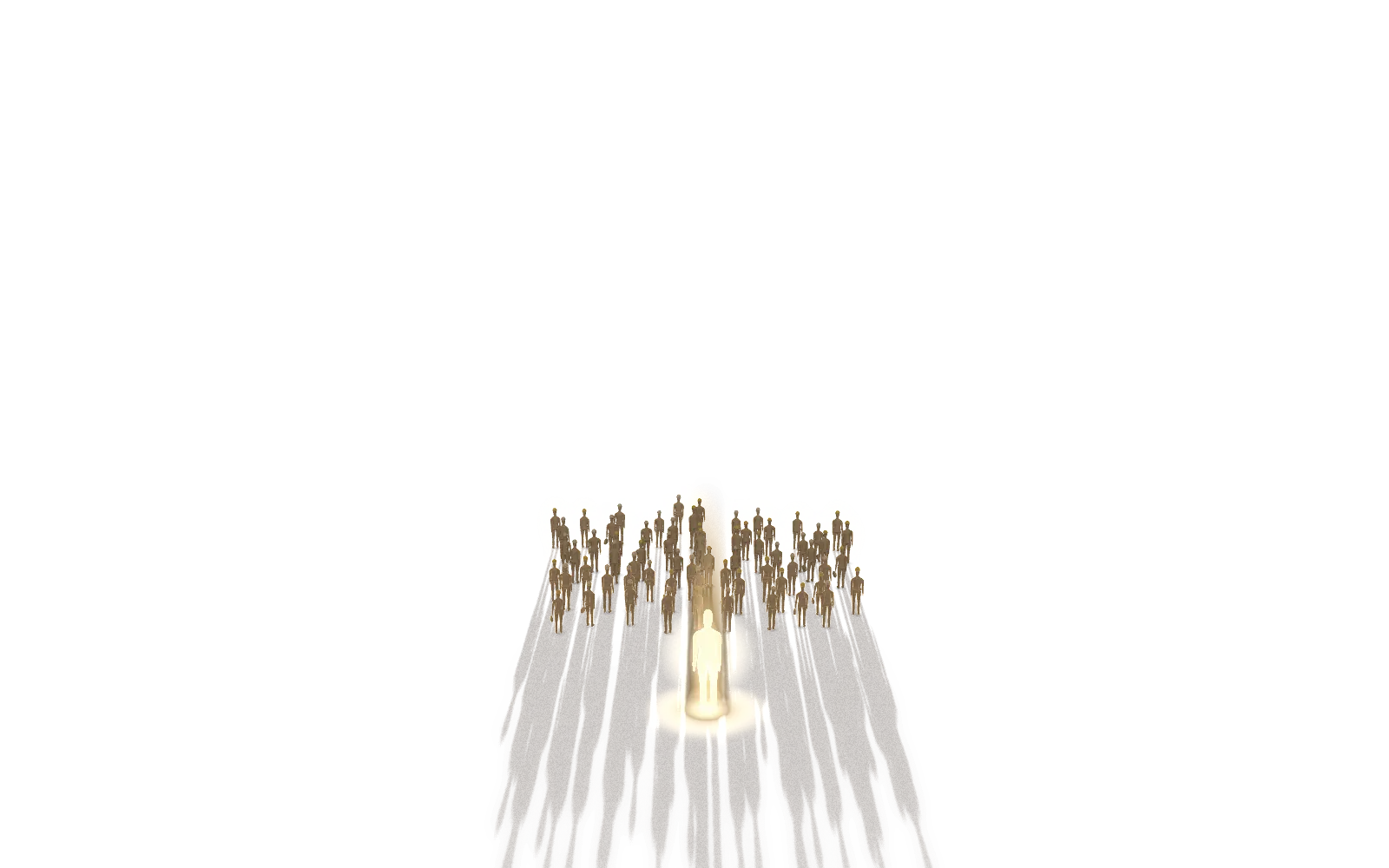
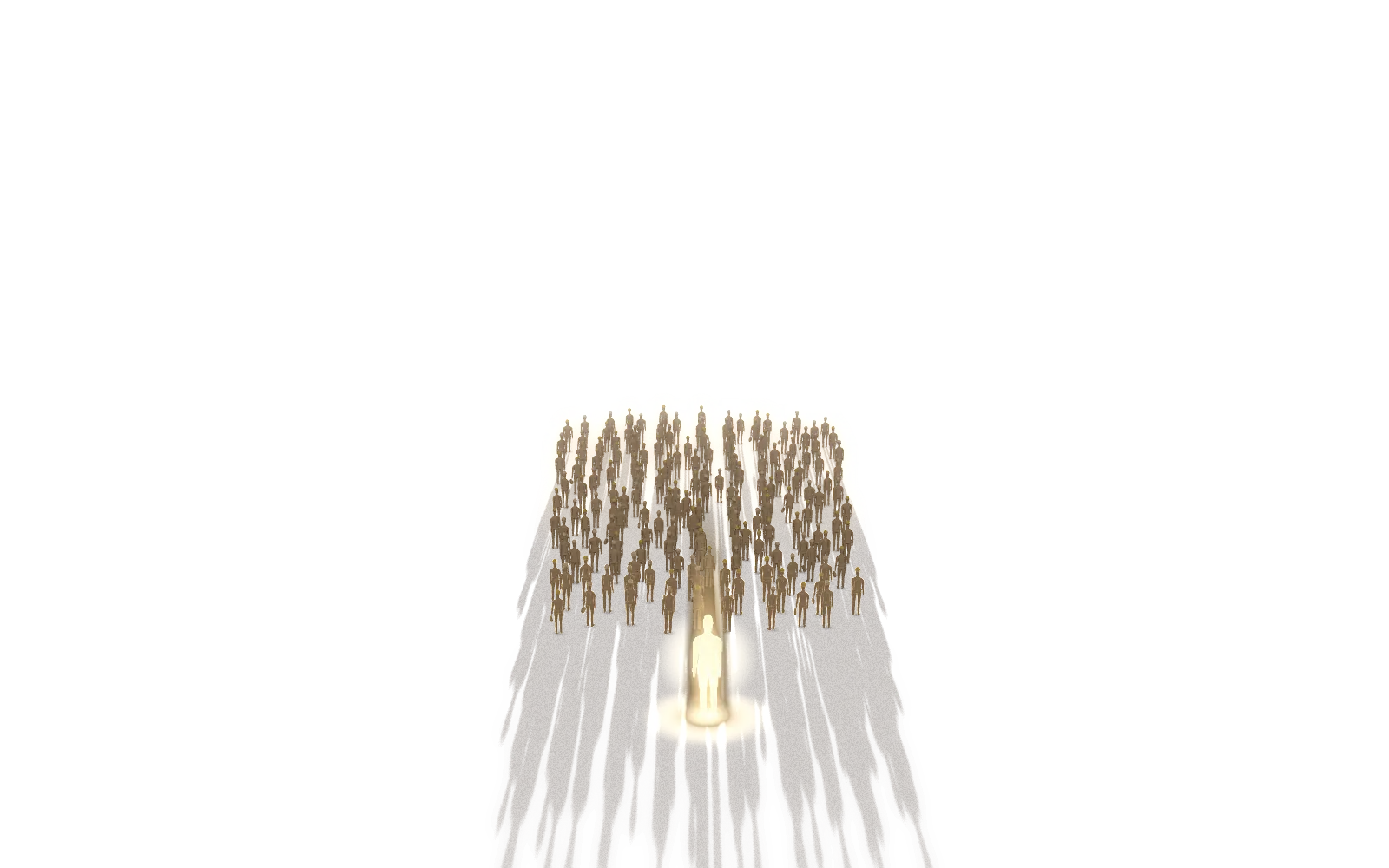
About 167,000

roofer jobs today

What this shows

roofer jobs today: about 166,900 roofers. 167 figures at 1,000 each.

1 figure = 1,000 roofers

Measured · Census 1900, 1970; BLS 2025

You stands in front of the crowd and is not counted.

Census counted people, BLS counts jobs, and the country grew too.

Labels on this scene

  • Picture Imagined future. Generated illustration, not footage. The street is an imagined future, not a photo of today's roofers.
  • Measured · Census 1900, 1970; BLS 2025 The number on screen.
  • Measured · Census 1900 In 1900, about 9,000 Americans worked as roofers.
  • Measured · Census 1970 By 1970, about 65,000.
  • Measured · BLS 2025 You're out in front.

Has roofing work grown or shrunk over a century of new tools?

You end on growth, with your figure out in front.

Census counted people, BLS counts jobs, and the country grew too.

Your figure is not part of the count.

See the exact numbers
Roofers in America: 1 figure = 1,000 roofers
ShotFiguresStands for
roofers in 19009about 9,000 roofers
roofers in 197065about 65,000 roofers
roofer jobs today167about 166,900 roofers

Measured · Census 1900, 1970; BLS 2025

  • Official estimate About 9,000 people worked as roofers in 1900 and 65,000 in 1970. Roofers held about 167,000 jobs in 2025. On the street, 1 figure = 1,000 roofers: 9, then 65, then 167. Source: Census - Historical Statistics of the US, Ch. D labor (OCR text); U.S. BLS Occupational Outlook Handbook - Roofers (Wayback capture 2026-09-20).
You

Roofers, then and now.

  1. In 1900, about 9,000 Americans worked as roofers.

    About 9,000 roofers in 1900

  2. By 1970, about 65,000.

    About 65,000 roofers in 1970

  3. You're out in front. Today there are about 167,000 roofer jobs.

    About 167,000 roofer jobs today

Your next step.Follow the next part ↓

Don't put your head in the sand. Take part.

Foundation gives roofing owners, office teams and crews a way to take part.

For Office teams

Map My ExitFor your owner: a free 30-minute callMake my planYour three steps, on one card

For Roofers and crews

Map My ExitFor your owner: a free 30-minute callMake my planYour three steps, on one card

Films and drawings on this page are AI-generated illustrations; the old photos are real (NASA, Library of Congress). Numbers come from Foundation's research model, not a forecast, and Foundation has a commercial interest in this change.

What this shows

Labels on this scene

  • Picture Imagined future. Generated illustration, not footage.
  • Disclosure Foundation works with roofing businesses. We have a commercial interest in this change. The paper and its model have not been peer reviewed by outside academics.
  • Our view Don't put your head in the sand. Take part. Foundation gives roofing owners, office teams and crews a way to take part.

What is your next step?

You leave with one clear next step for your role.

  • Editorial Don't put your head in the sand. Take part.
  • Foundation position Foundation gives roofing owners, office teams and crews a way to take part.
  • Project decision Map My Exit: free 30-minute call for roofing owners.
  • Disclosure Foundation works with roofing businesses. We have a commercial interest in this change. The paper and its model have not been peer reviewed by outside academics. Source: Foundation Projects - The work above us (article text, 2026-10-03).

My plan to take part.

Your plan card · Roofing business owners

My plan to take part (owner)

Three steps, in our view.

My plan to take part (our view)

  • Let my crew help pick the first task to test.
  • Ask every robot vendor: what does each accepted task cost?
  • Map My Exit: free 30-minute call for roofing owners.

See the numbers

The model's numbers are in the research paper: foundationproject.net/research/roofing-scenarios. Other sources are listed under Sources and limits.

Foundation's interest

Foundation works with roofing businesses. We have a commercial interest in this change. The paper and its model have not been peer reviewed by outside academics.

Your answers stay in this browser. No form is submitted. They never go into a link.

Your plan card · Office teams

My plan to take part (office)

Three steps, in our view.

My plan to take part (our view)

  • Learn to run the AI tools and check their work.
  • Own the customer conversation.
  • Share this with my owner.

See the numbers

The model's numbers are in the research paper: foundationproject.net/research/roofing-scenarios. Other sources are listed under Sources and limits.

Foundation's interest

Foundation works with roofing businesses. We have a commercial interest in this change. The paper and its model have not been peer reviewed by outside academics.

Your answers stay in this browser. No form is submitted. They never go into a link.

Your plan card · Roofers and crews

My plan to take part (crew)

Three steps, in our view.

My plan to take part (our view)

  • Learn the machines before they show up.
  • Teach the next roofer.
  • Ask who owns the recordings of my work.

See the numbers

The model's numbers are in the research paper: foundationproject.net/research/roofing-scenarios. Other sources are listed under Sources and limits.

Foundation's interest

Foundation works with roofing businesses. We have a commercial interest in this change. The paper and its model have not been peer reviewed by outside academics.

Your answers stay in this browser. No form is submitted. They never go into a link.

Your choices and answers will appear here.

Kept in this browser. No central tracking or form submission.